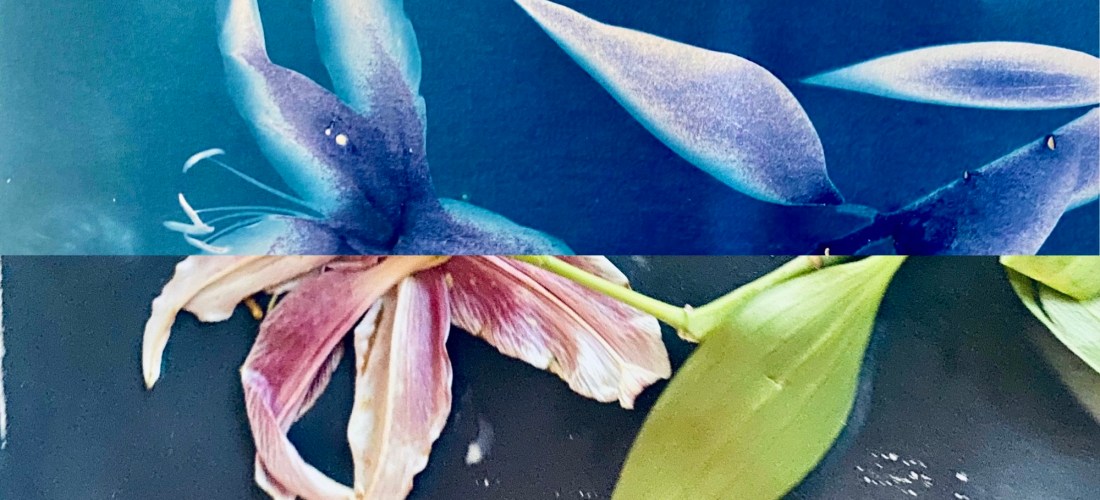
Sensory Cyanotypes

eco photography, Environment, photography workshops

I’ve always been interested in the overlap between the senses – sight, hearing, smell… . Many years ago I wrote a dissertation about Synaesthesia in Theatre and TV. I knew as a director that if you bombard the eyes with red for example, you will get a visceral response from your audience. I’ve always believed there are subliminal connections between for example colour and sound. For me a Middle C note is royal blue and always has been. After all, light and sound are just different types of waves, and colours and pitches are different frequencies.
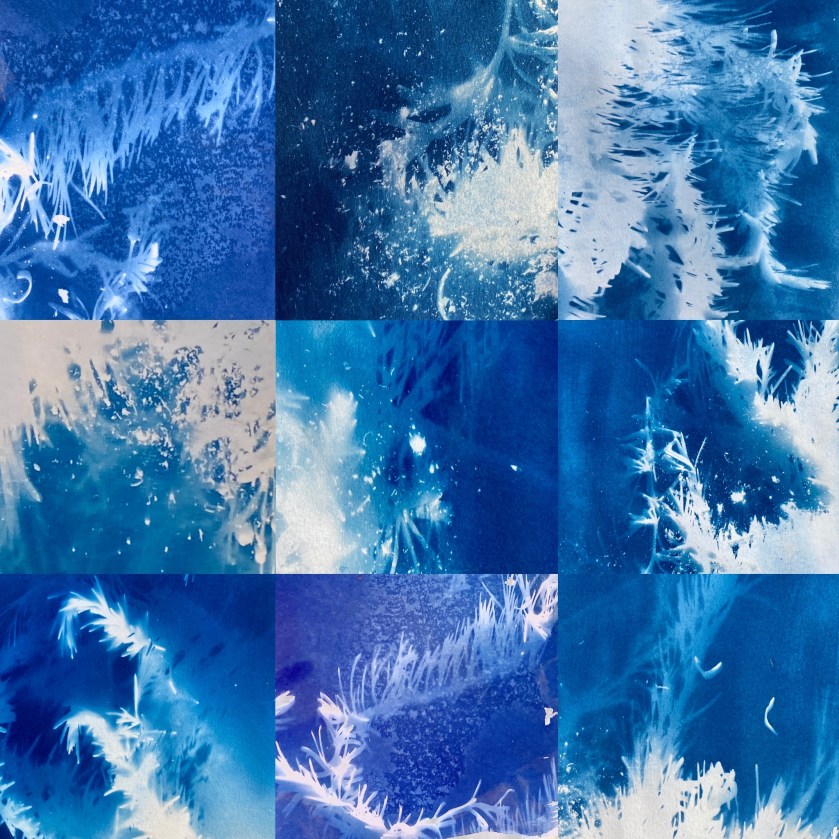
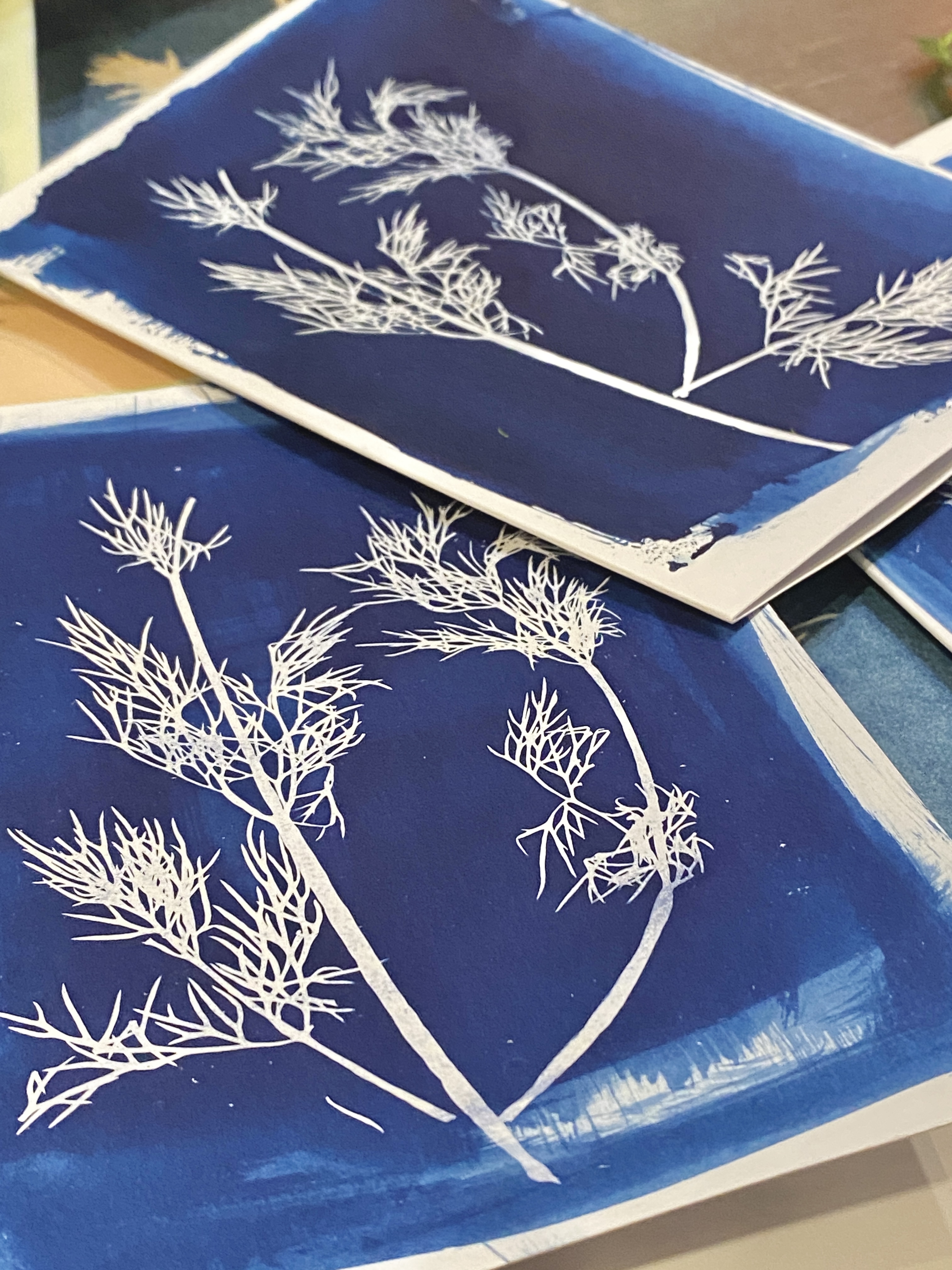
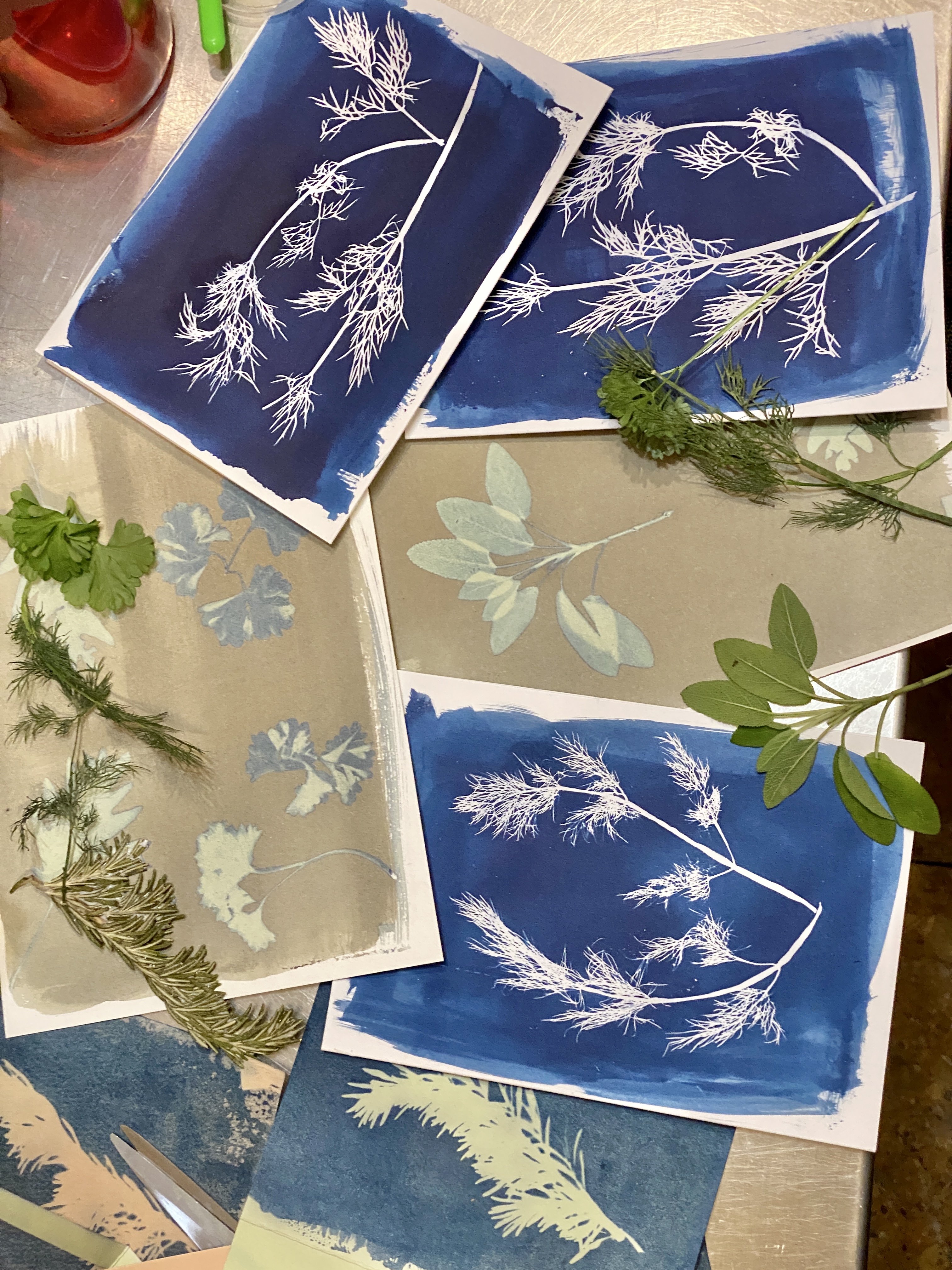
Rosemary cyanotypes

When I work with ultraviolet light in my cyanotype printing I am very aware that the optimal frequency is 365nm. I can see the effects of sun, and all manner of clouds of the final print – I work with the weather to get the precise results I am after … I can control contrast and colour by harnessing the elements in the same way a farmer does to maximise his yield. This week I have noticed that my freckles start forming when UV breaches a certain point, I can literally feel them forming on my skin – no need for a light meter!
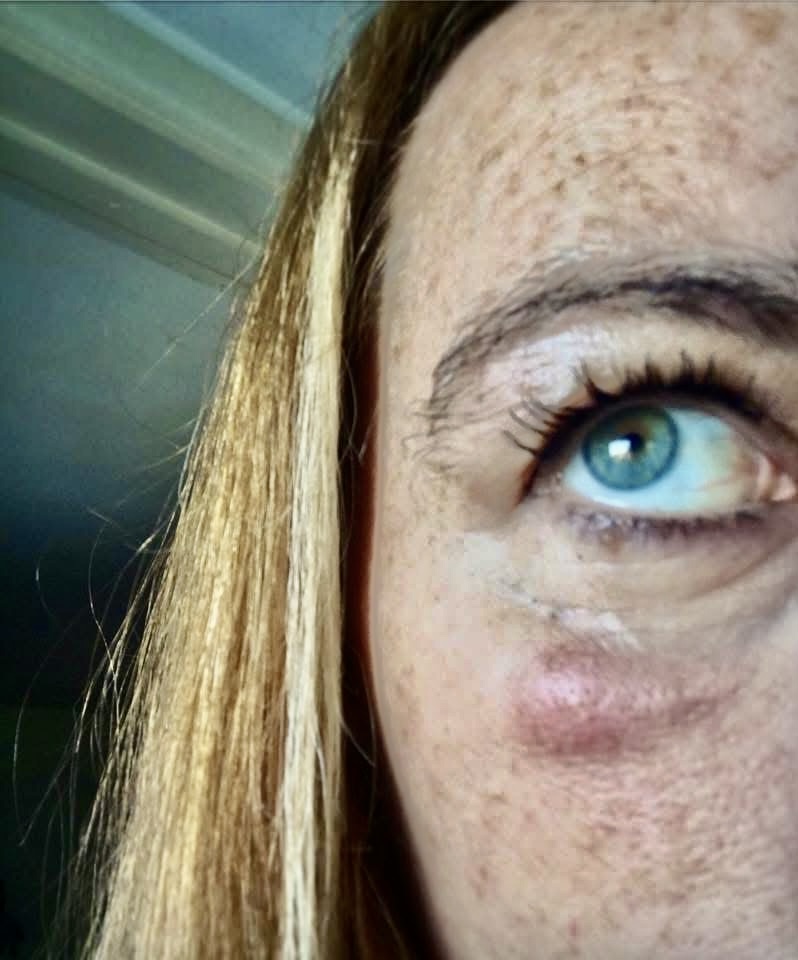
Pic of my mozzie bite and freckles

And that brings me to the connection between Earth, Body and Spirit, one that I fear we are losing in today’s concrete jungles. I’ve worked with city kids who have never touched a growing plant and don’t know where supermarket veg comes from beyond the plastic tray. When I lost my senses of smell and taste for years after Covid, the world felt a very 2-dimensional place. I felt detached, like I was living in a simulation of reality, a character in a computer game. When my senses returned I felt euphoric, and determined to never take these senses for granted again. I found out about the charity Fifth Sense who help people with smell/taste disorders and I did their training and now volunteer for them, to help raise awareness.

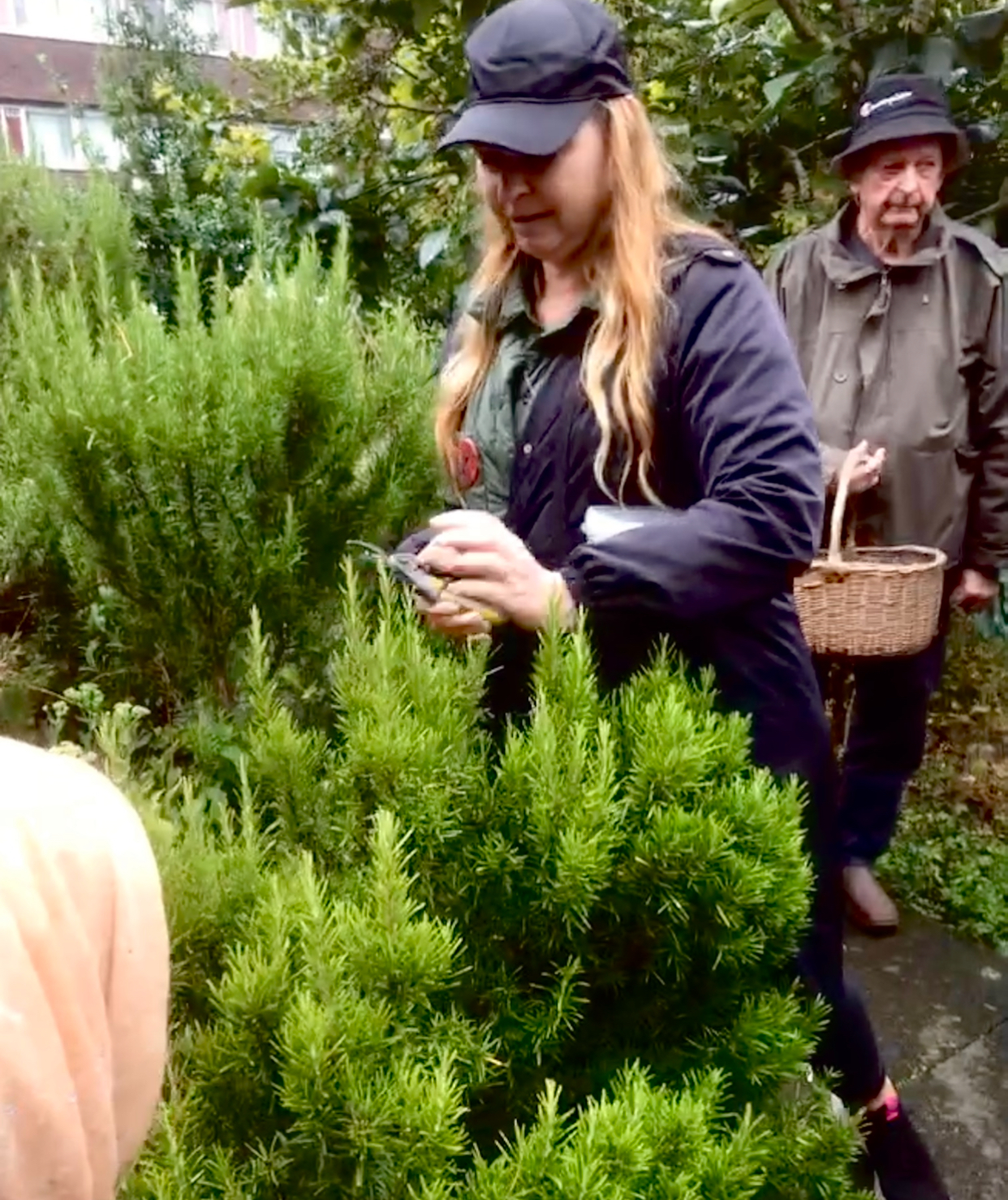
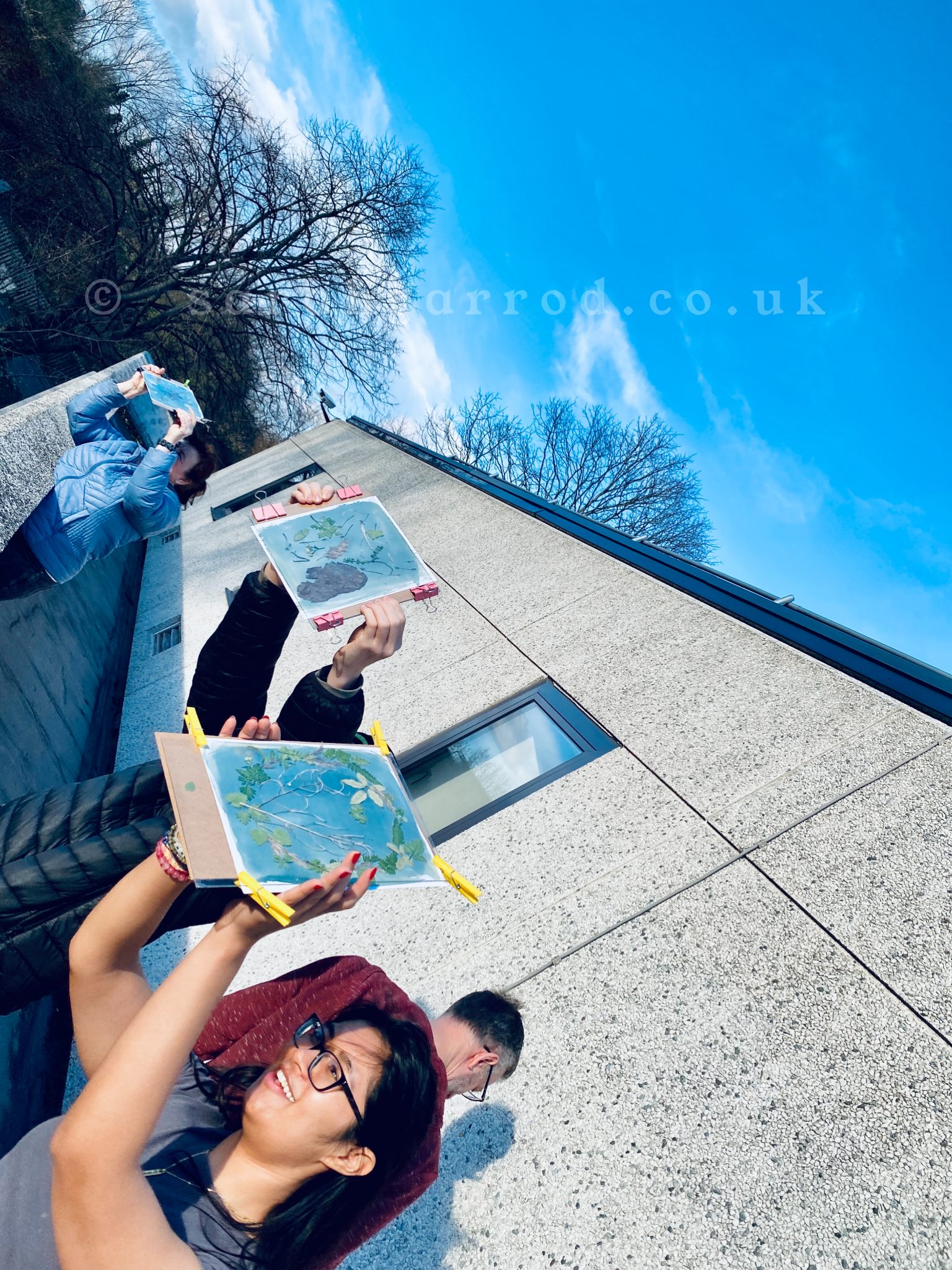
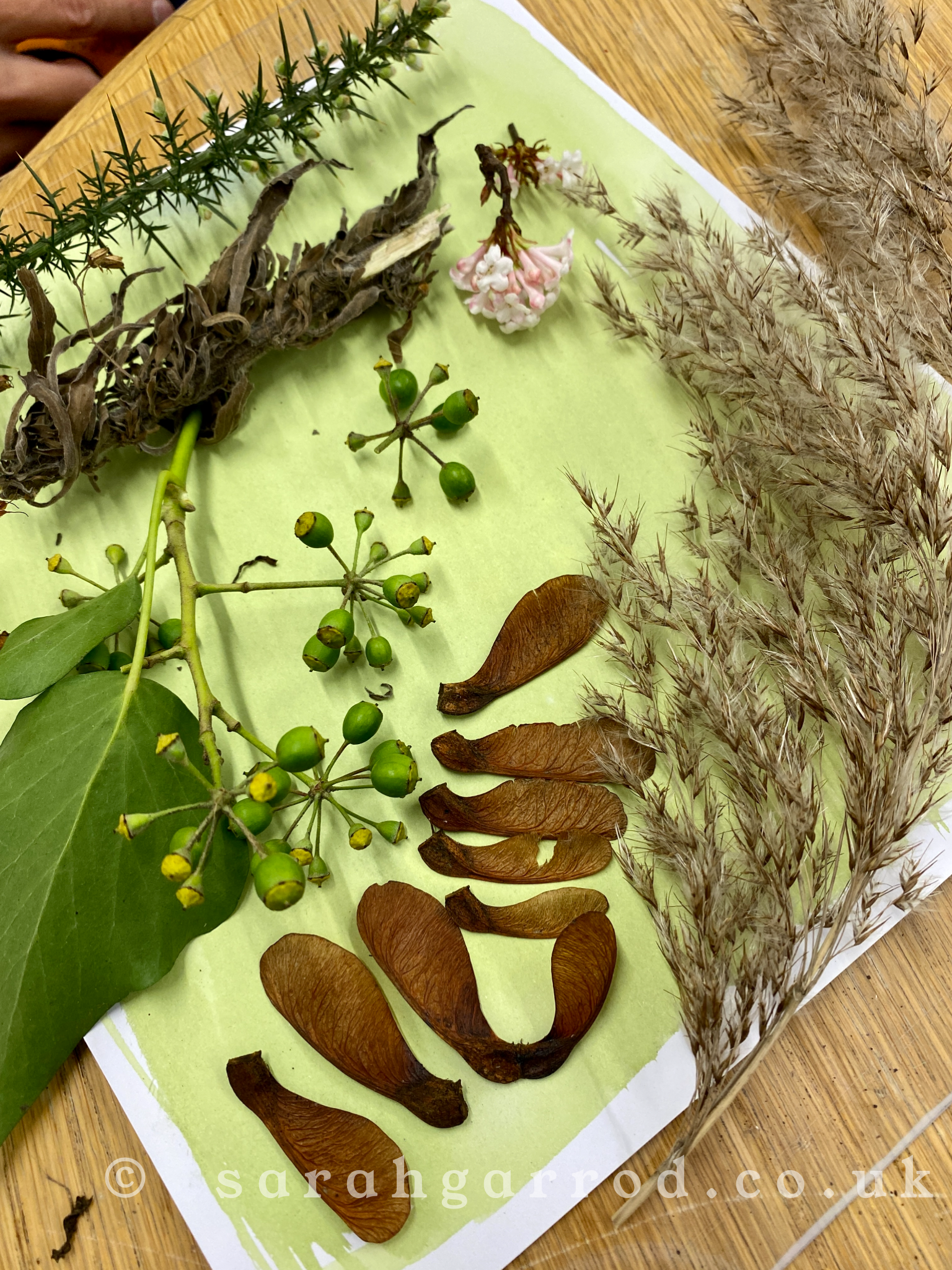
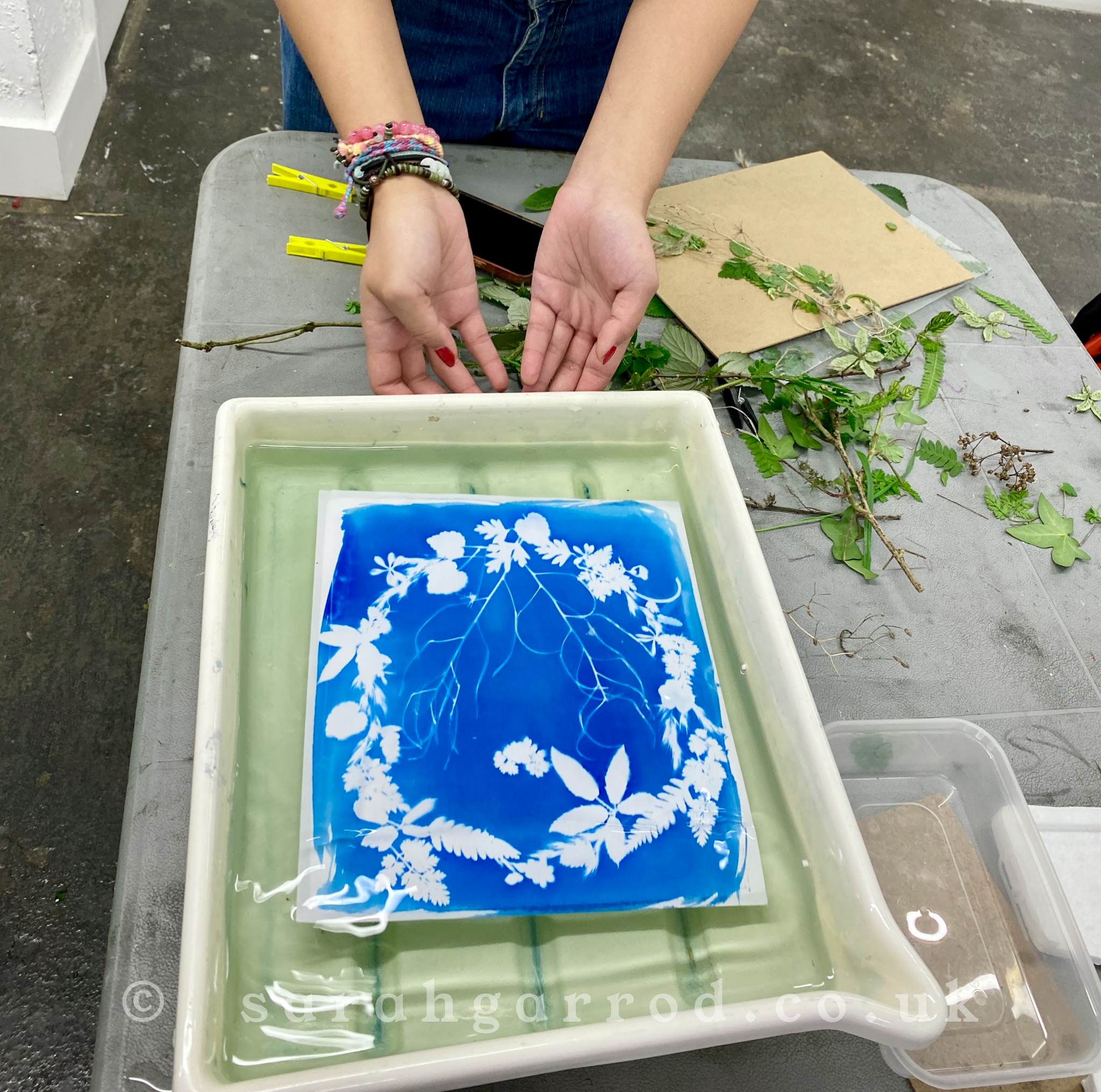
On the day that my sense of smell returned I happened to be picking rosemary at the John Evelyn Garden in Deptford. So this is where we are running an informal workshop on Fri 16 May 2025 2.30-4pm. Suitable for anyone wanting to explore the senses and nature, and to get hands-on with plants and make a cyanotype print with sunlight. We will be continuing the discussions of sensory perception then. Details on how to book a free place here

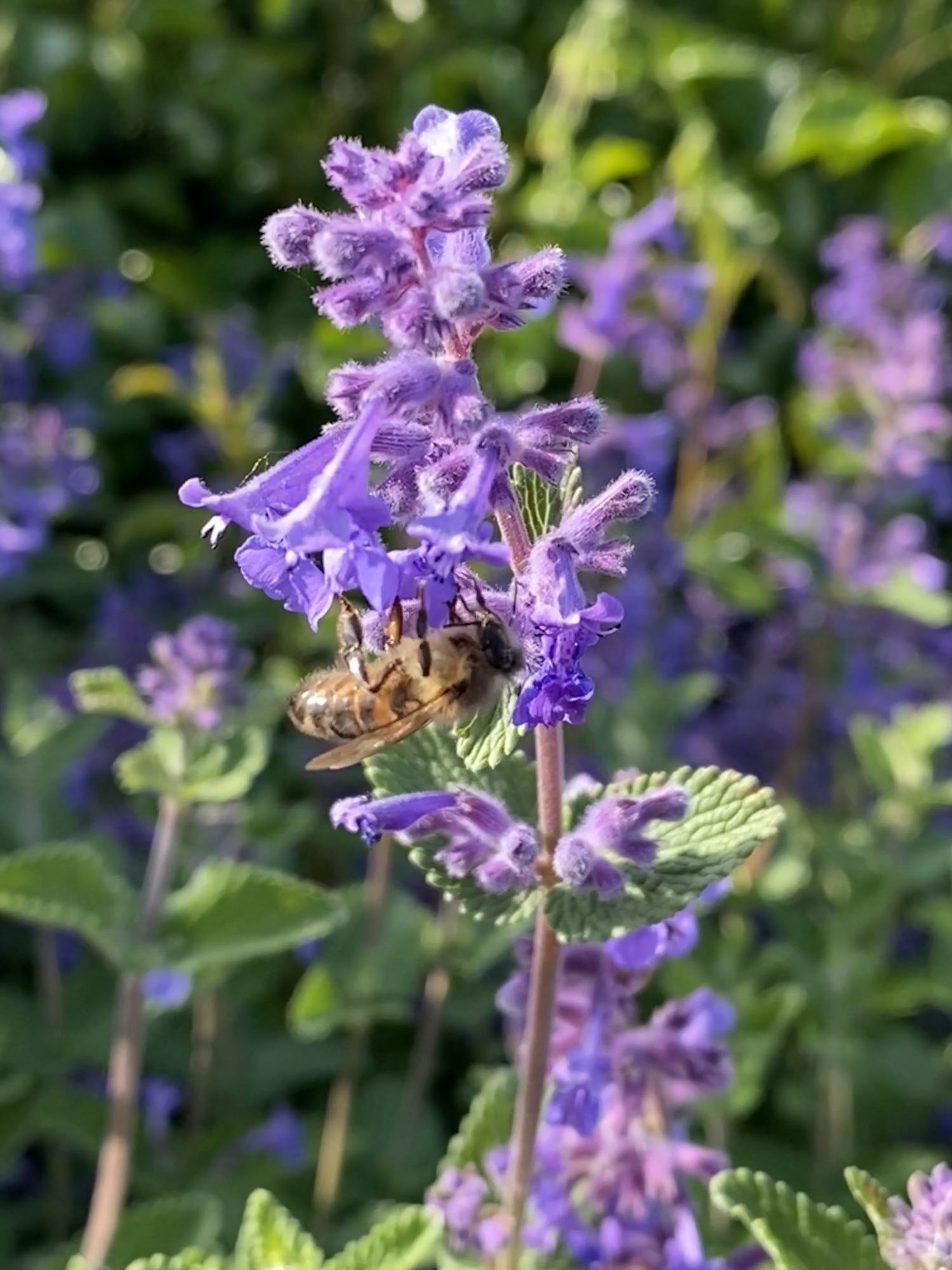
Let There Be Light!
Environment, events

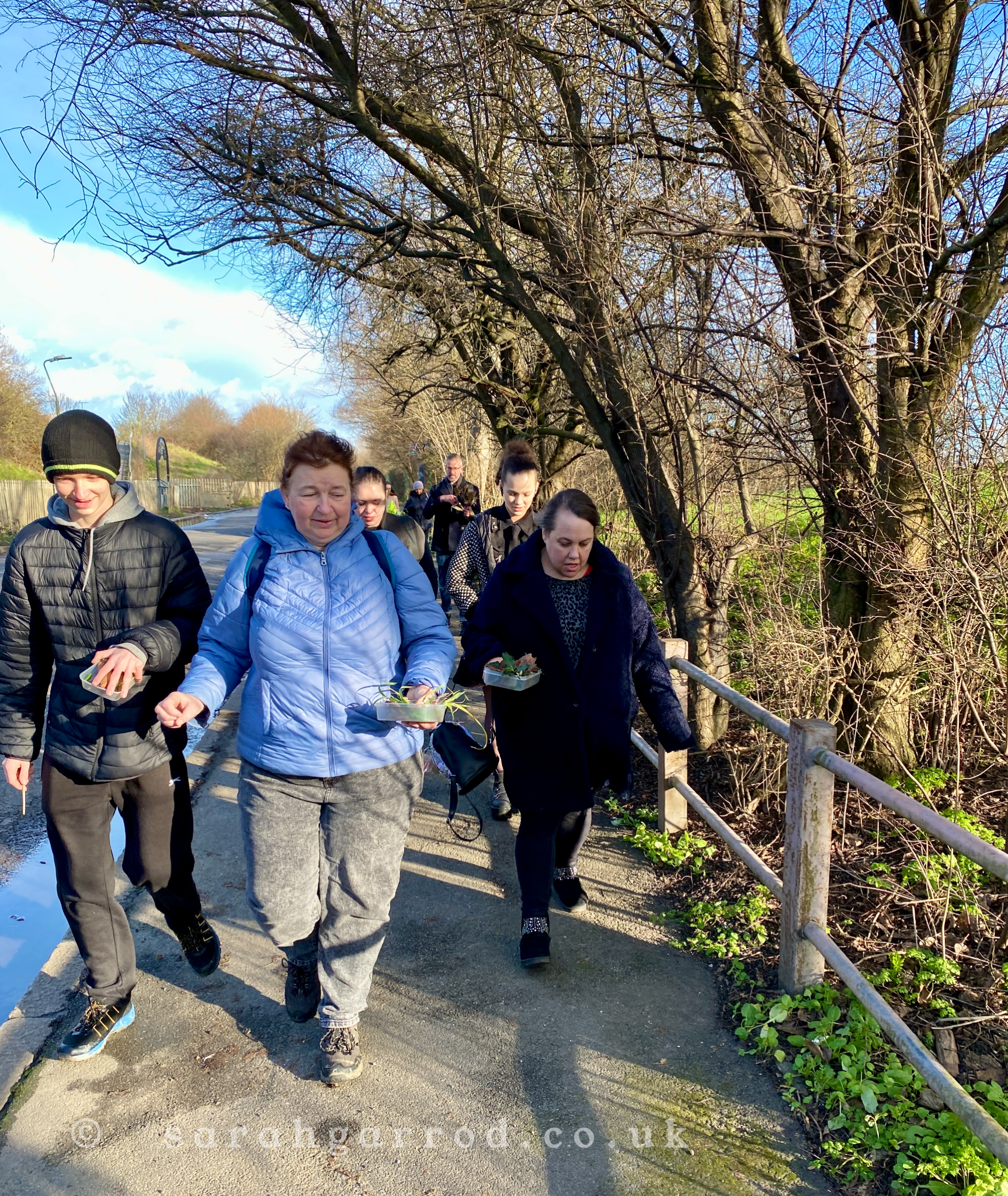
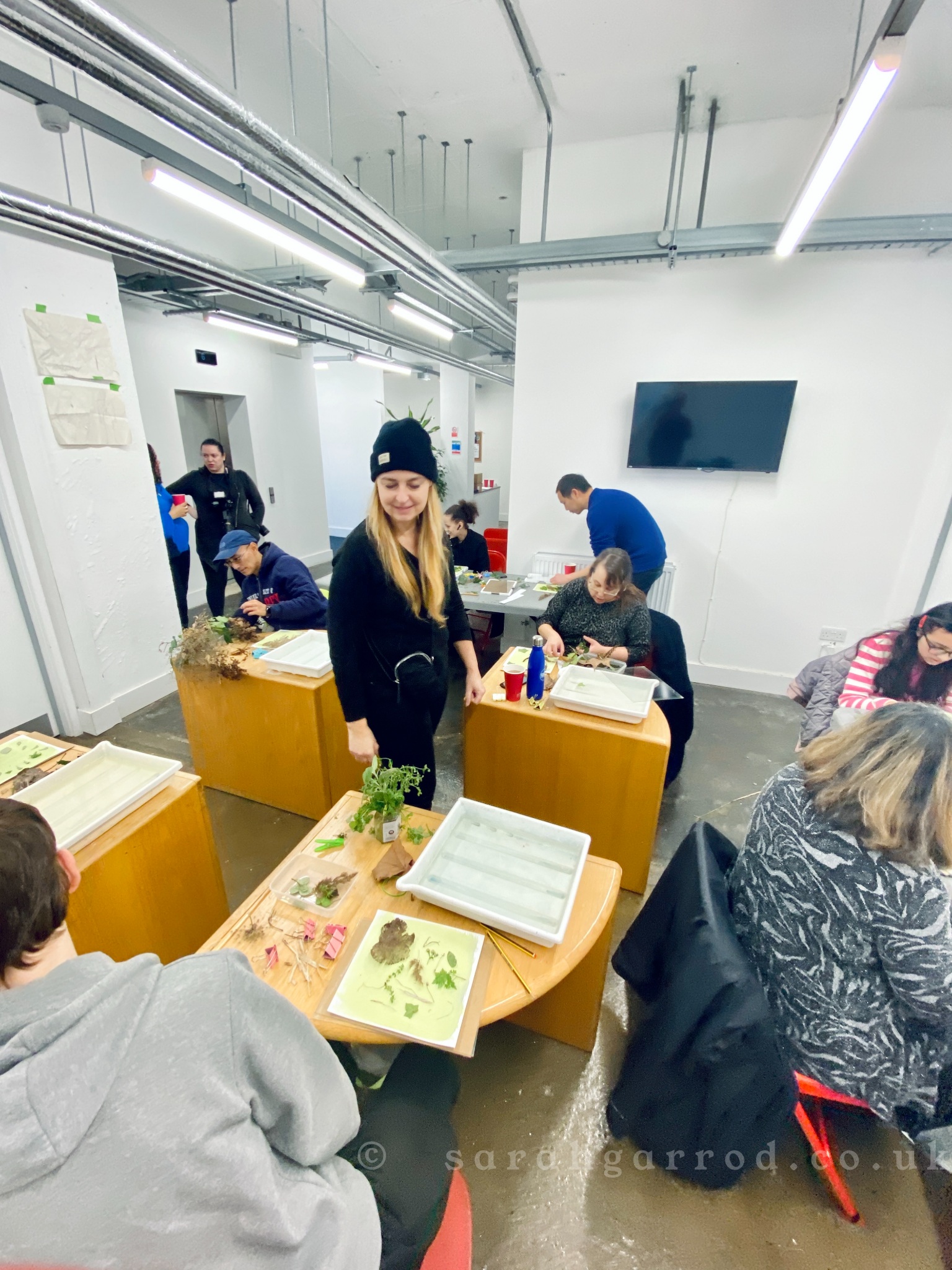
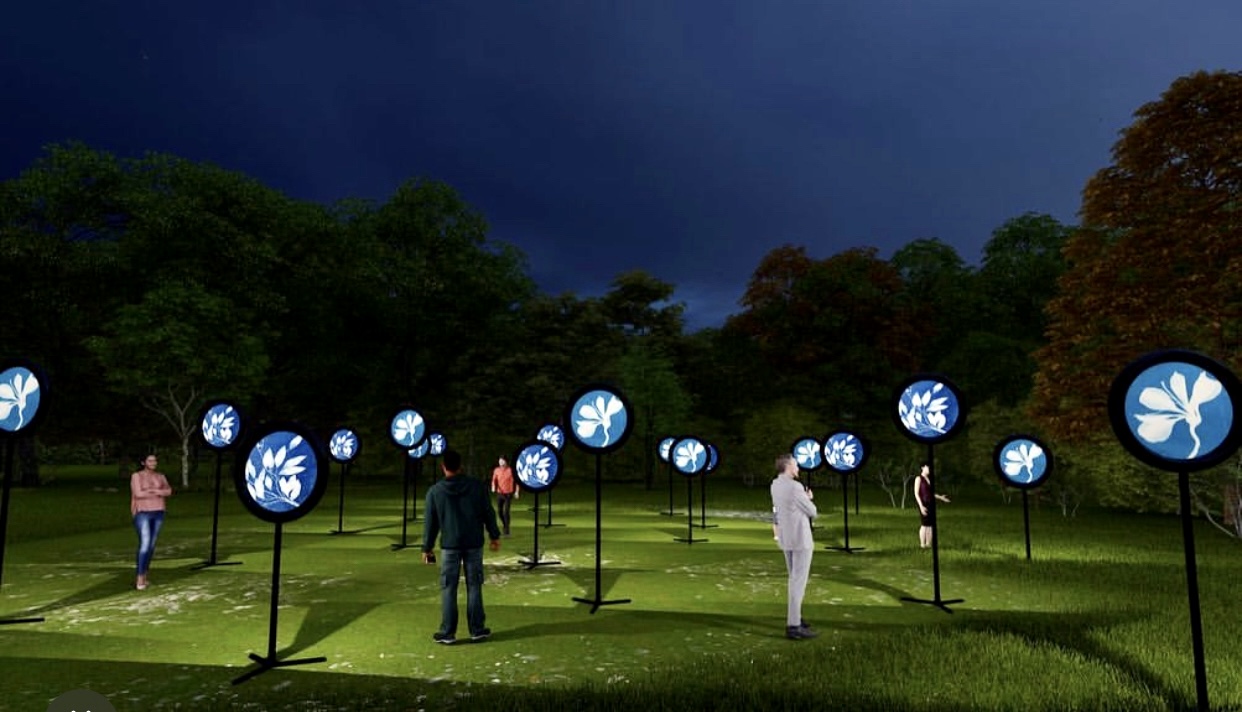
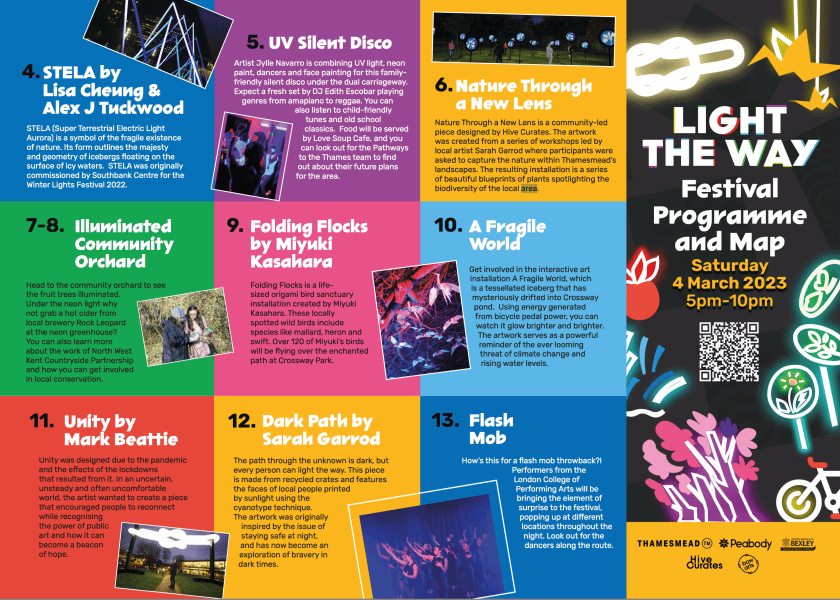
2023 has got off to a bright start! I’ve been working on the Light The Way Festival for Hive Curates. I’ve run workshops with local residents – we’ve been on Nature walks along the Ridgeway, the Orchard, and the canals in Thamesmead. Then we made cyanotypes which will be scanned and incorporated into the “Nature Through A New Lens” installation.

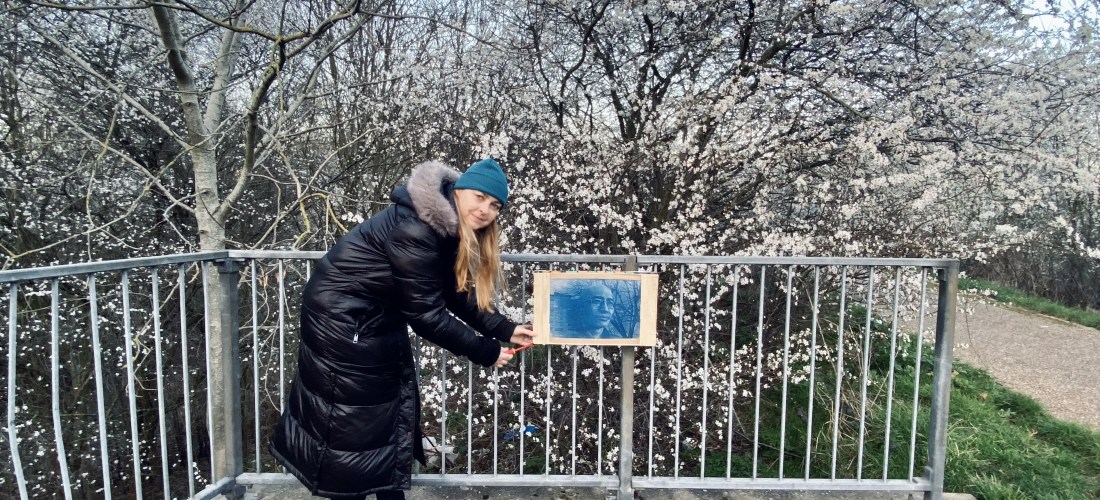
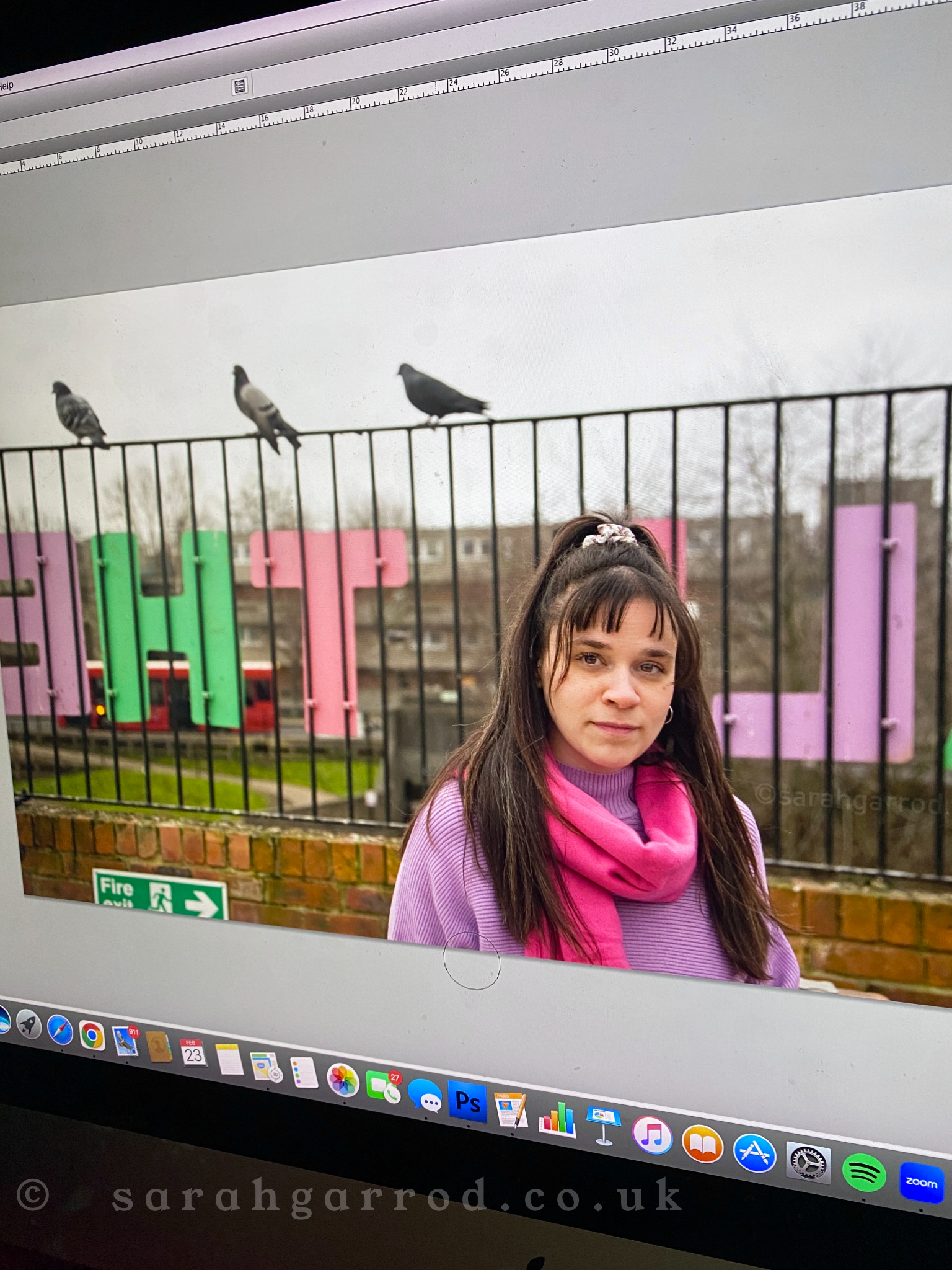
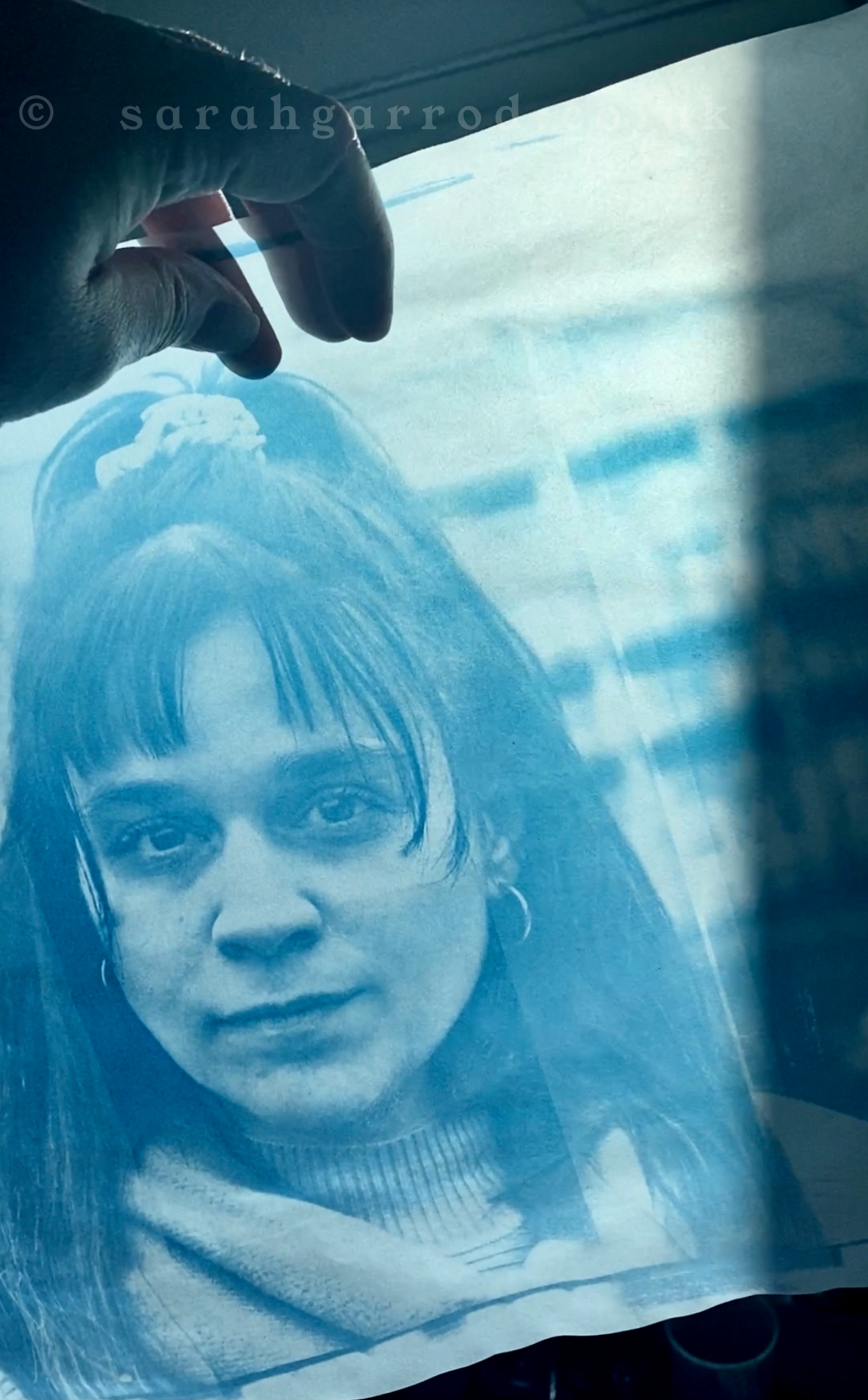
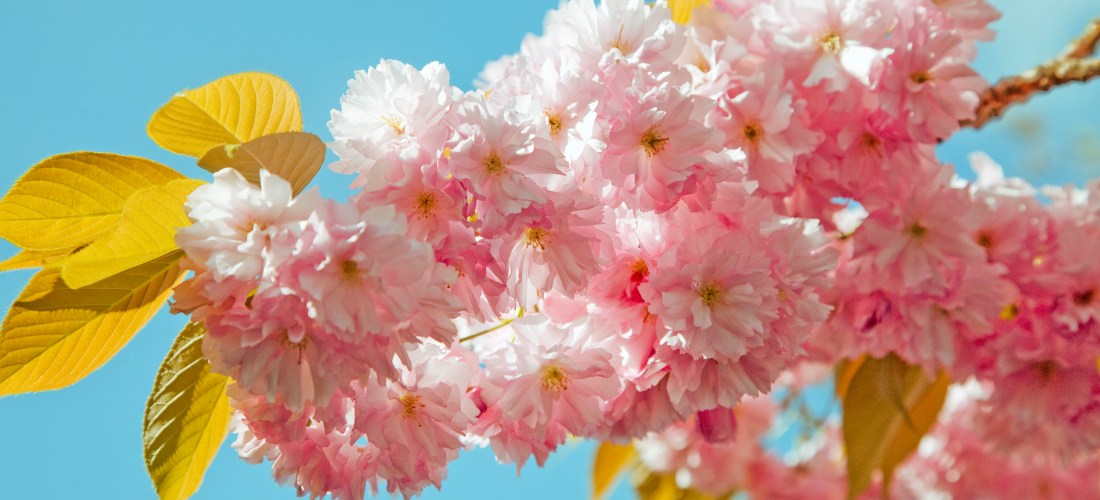
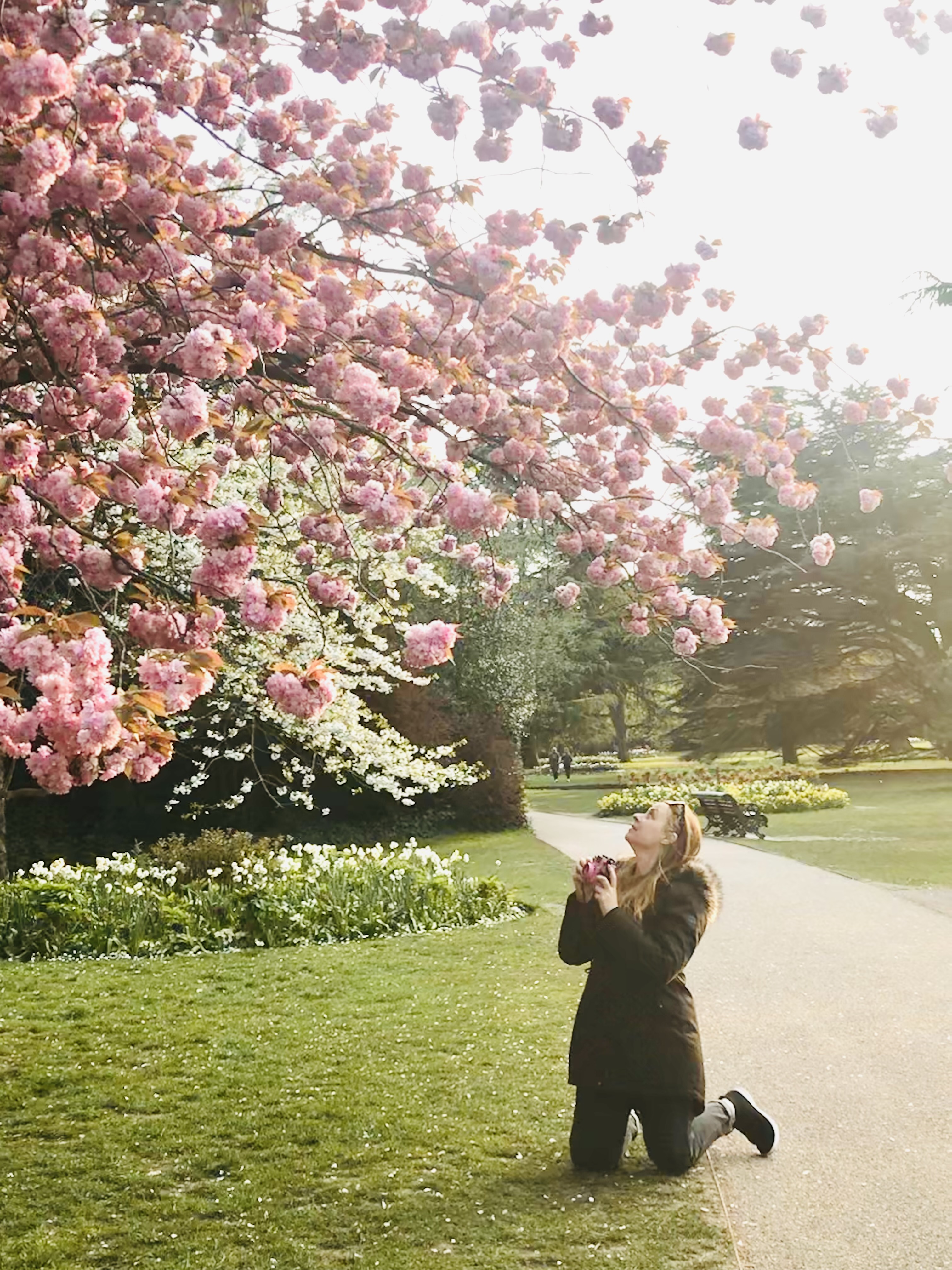
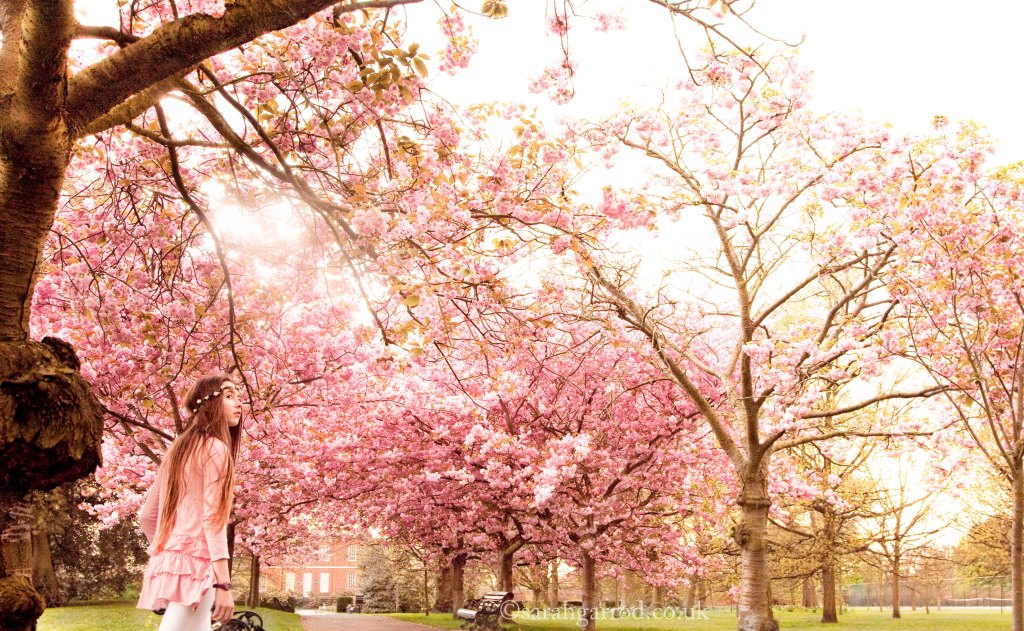
I’m also presenting my own piece “Dark Path”. This is a recycled version of my previous “Dark Alley” work, with updates made to the vandalised boxes, and some faces from the workshops featured in my unique lightcrates. I think I did pretty well snapping the participants during our tea break. I love the site I’ve been allocated on the Ridgeway, and I am scattering the boxes there so that they are more site specific. As you can see from the header picture it is currently drenched in blossom. I hope to involve some plants and UV lights too! Its been quite intense work – lots of late night soldering and splinters.
Winter can be such a depressing month, especially the cold dark days in London. I am delighted to take part in “Light the Way”, getting people out in Nature for a long walk, its the best medicine! Light festivals seem to replacing things like Bonfire Nights, we really need safe outdoor events so people can socialise.

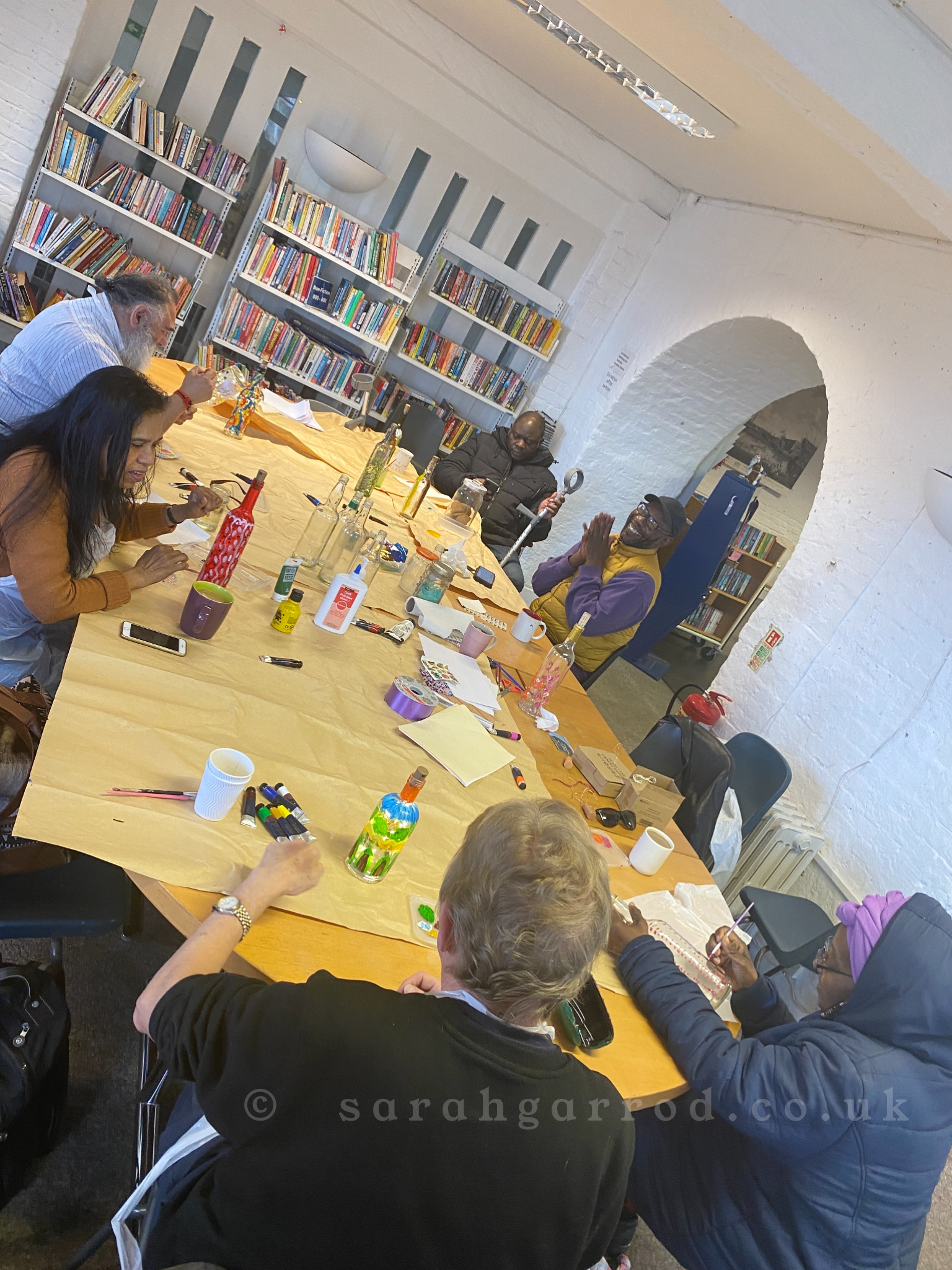
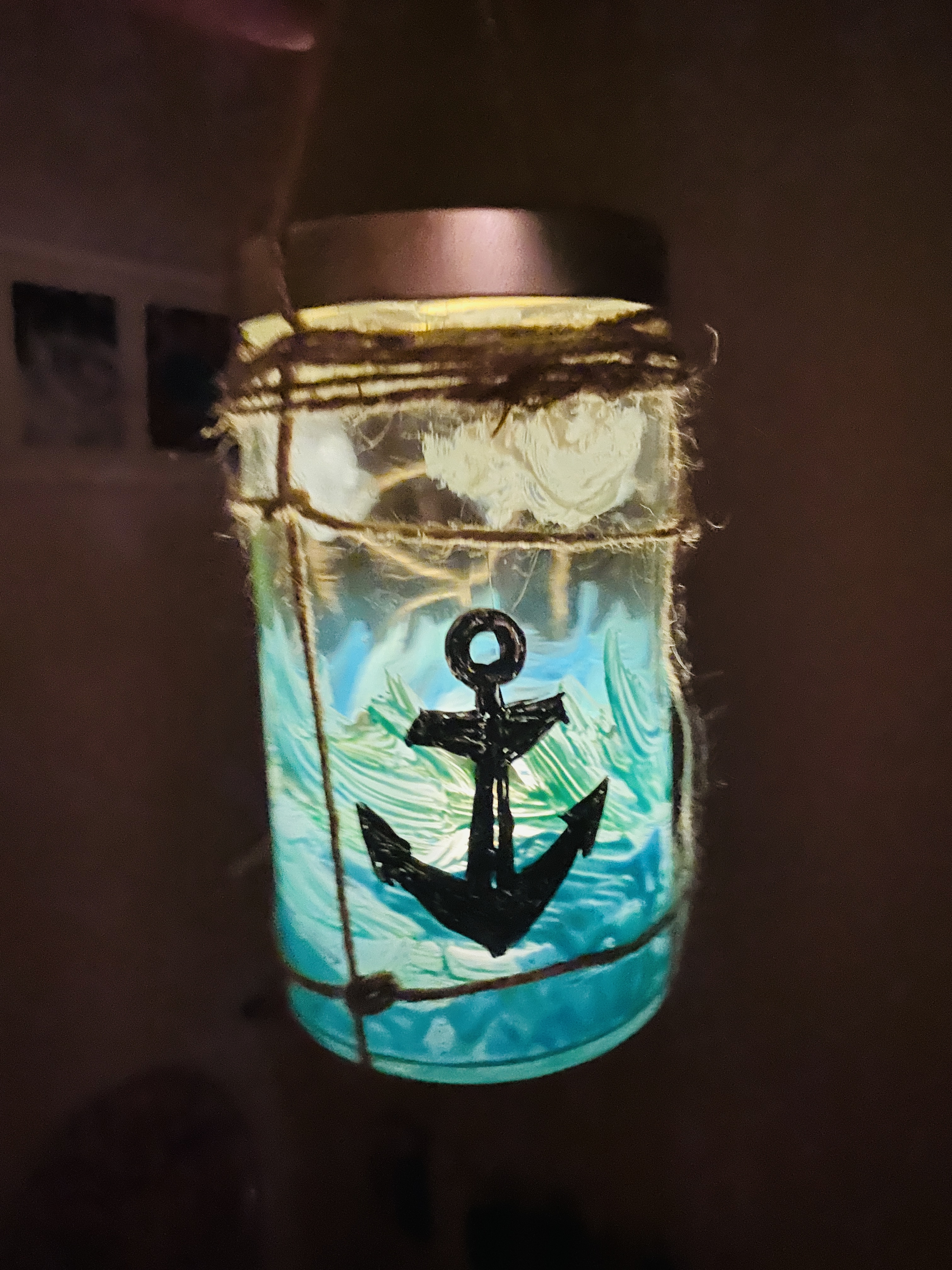
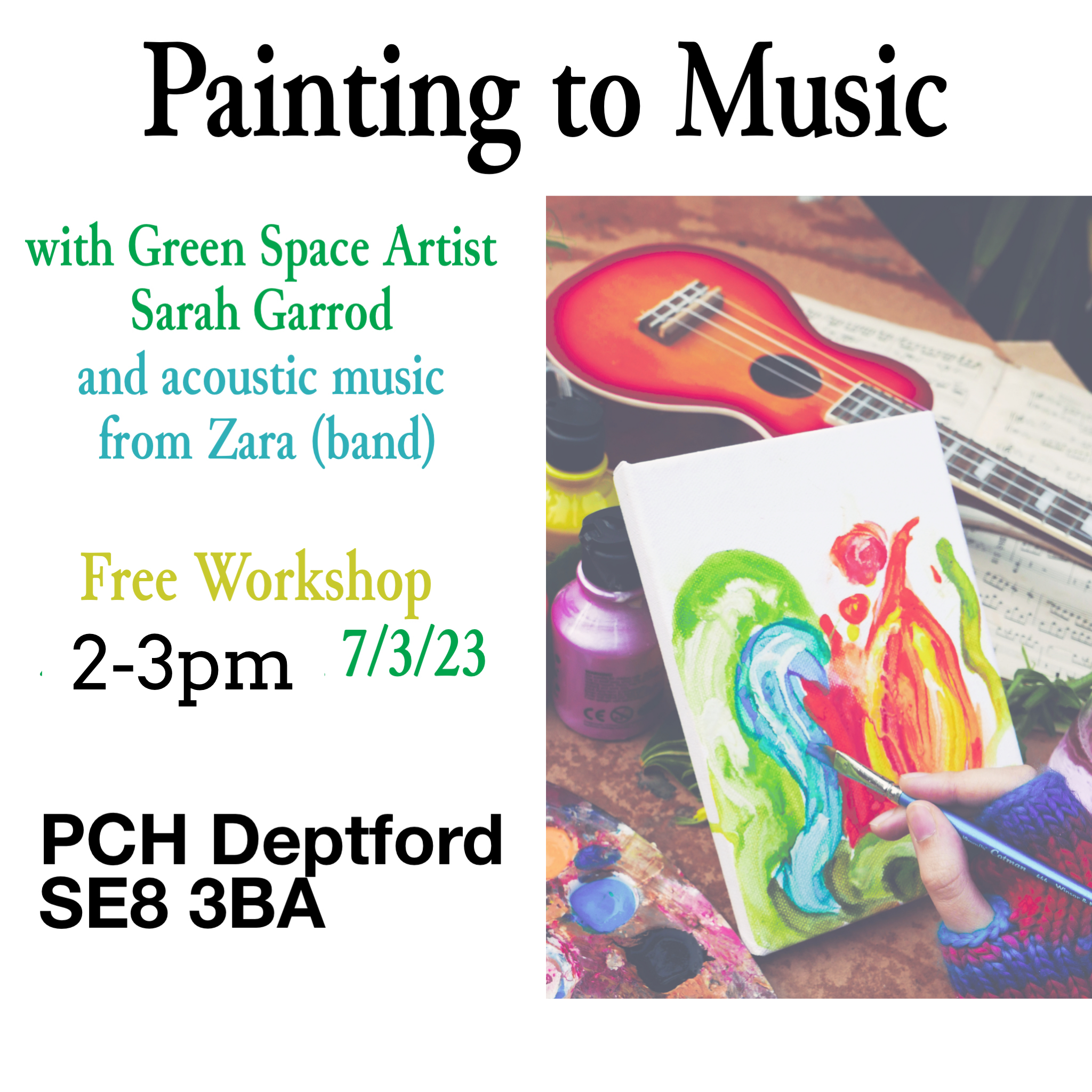
Similarly, I have been helping out with Pepys Warm Welcomes in Deptford. I had to drink a lot of wine (kidding) to provide enough bottles for people to recycle into lamps with me! The lamps came out so well. Its a great idea to get people in one centre to save money on their own heating bills. So many wins for the environment all round! Next week I’ll be running a casual “painting to music” session, and Paul and I will be performing some of my songs unplugged !

I hope to see you at some of these free events.

Encroaching on Wildlife

eco photography, Environment

Last week I had a few brushes with other species that got me thinking. Firstly – this time last year we were in the middle of the “anthropause”. The skies were bluer, the air was cleaner, pollution vanished from satellite photos and wildlife seemed to be edging back en masse. We’d encroached on wildlife and a virus had hopped across the species divide and ‘punished’ us.

Spoon-feeding a bee

Last May was the sunniest month on record. All that UV was hopefully killing some Coronavirus, but it was also stimulating what the ‘birds and bees’ do best – reproduce. While humans weren’t allowed to meet, let alone hug, the other species were making up for lost years. Instead of constant aeroplanes, we heard the tweeting of baby birds and the buzzing of bees as we spent more time in Nature.

I did find lots of dying bees, and ones that could not fly. I revived this one with raspberry and sugar water. I noticed he had deformed wings.

I’ve lived in inner London for over 30yrs. In 2020 we had bees and wasps returning to our garden to nest, 3 new bird species moving in, 6 fox cubs,…… In 2021 this lot are still around along with their offspring. There are daily fights for territory, every species is crowded-in and fighting for space and food. We are all fighting new housing developments that concrete the ground, throw land into shade , and strip away mature trees and the creatures that live around them. A few miles away my heart breaks for mature trees felled for flats in Deptford.

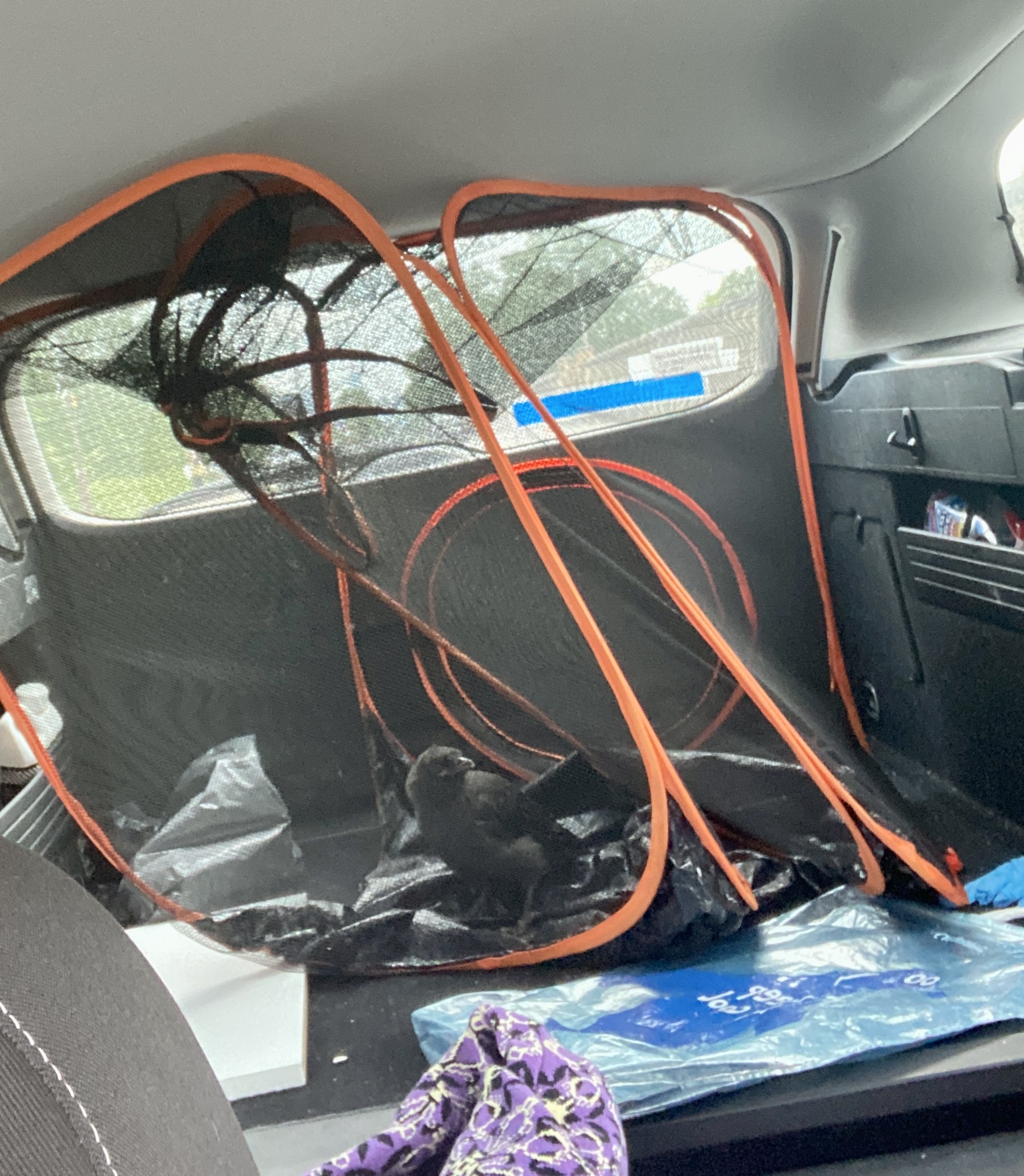
So what has this to do with photography? Well last week I was walking to the darkroom and came across a man talking to a baby crow that was perched on a wall in scorching sunshine. Needless to say I never made it to the darkoom as the crow needed help. The man was a scrap metal merchant and had attended to the crow several times that day and was dripping some water into its beak. The baby crow seemed to have no parents around. I went to the shop and came back with some ham. I ripped the ham into strips (not pleasant as I am vegetarian) and the grateful baby crow gobbled it up. Wildlife Rescue said that if we left it there it would die, a cat could catch it, and we were right beside a busy main road. So I put the crow in a cardboard box and hopped inside the van of the metal merchant who drove me home. I shut my cats away and put the crow in a pop-up cat run tent in the shade. I fed him cat food and warded off magpies and foxes. He revived, but was exhausted. He snuggled up beside me and napped. The Wildlife lady texted me “You are his moma now” . I felt so sorry for this poor displaced crow and we had a bond. I cried for this baby. They are such clever creatures, he recognised my voice and perhaps my face and started trusting me.

In the evening I drove the crow to a lady who took him on the train to London Bridge where she rendezvoused with ‘the Crow Man’ who had collected many crows that day. The next day I was told the crow was doing well in a sanctuary in Ealing.

Then there are the foxes at the bottom of our garden. 5 beautiful fluffy cubs soon became four. City foxes are so tame, they have a symbiotic or even parisitic relationship with man. They raid our bins and happily live off the vast amount of food that we waste. I ordered mange medicine and infection medicine as one has a limp and one has a cough. I put the medicine in jam sandwiches as instructed by the Fox Project. The foxes eat the slugs that feed off the vegetables I have planted, so that is a bonus. However as soon as the strawberries and tomatoes hit peak ripeness the foxes scoff the lot. They also ate one of the young doves who are newly resident since lockdown.

Ironically , the next day I was rescuing a handsome Stag Beetle from the beak of a crow. Stag Beetles are endagered (extinct in many countries) but I have lots of rotting decking in my garden specifically for them as it can take 7 years for their larvae to pupate. I put some card in front of him , he walked onto it, I took a photo, and then put the card under a shady bush where a crow wouldnt see him. I wince when I see photos of people holding stag beetles, on Instagram you really should not touch them they are very delicate. Of course people don’t know that. I grew up on a smallholding and had experience of all manners of creatures. But some Londoners aren’t so lucky. I think it’s vital to maintain an understanding of our fellow creatures and our connection to Nature.

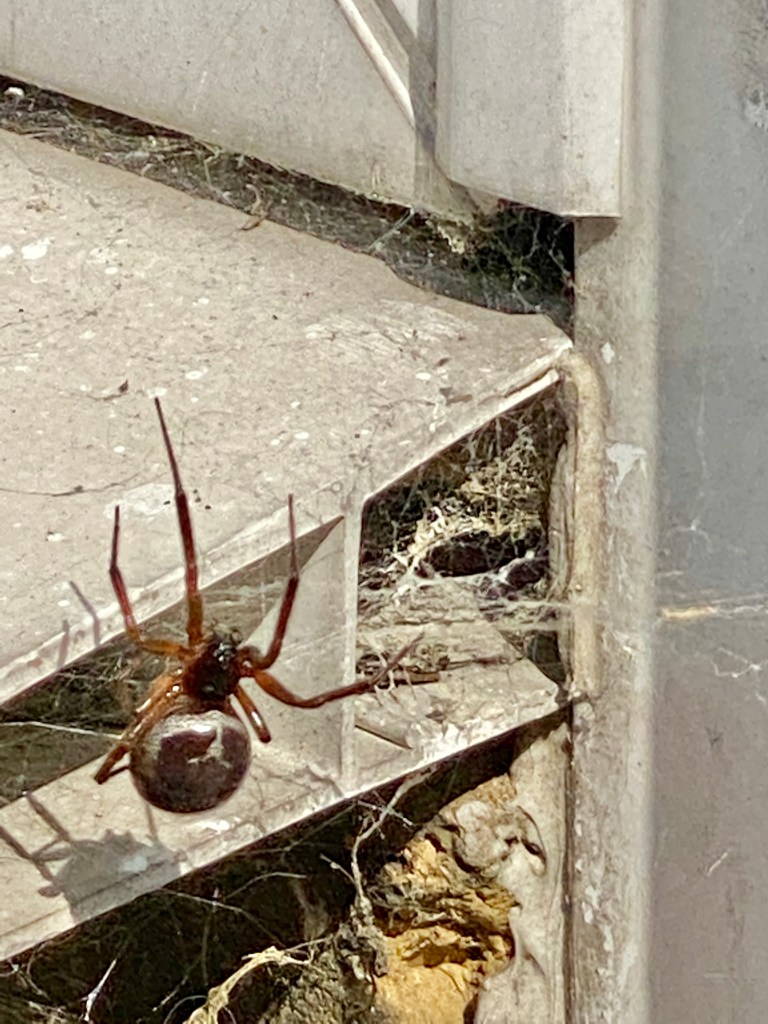
Another new visitor I am not so welcoming of is this False Widow that was sunbathing within inches of me. I’d never seen one of these before, except in newspaper articles talking about their venomous bite and East London schools being closed because of them. I cant even bring myself to kill a spider, but this one was scary indeed.

Meanwhile, in the garage was a zombie spider! Covered in fungus but half alive !

As humans, we are still very much a part of the food chain, but there is a feeling that we could in future rise above even that. As we integrate ourselves more with machines and technology we eject other species from the planet. As we take over their habitats we run the risk of more animal-bourne viruses, but right now even science is combatting those.

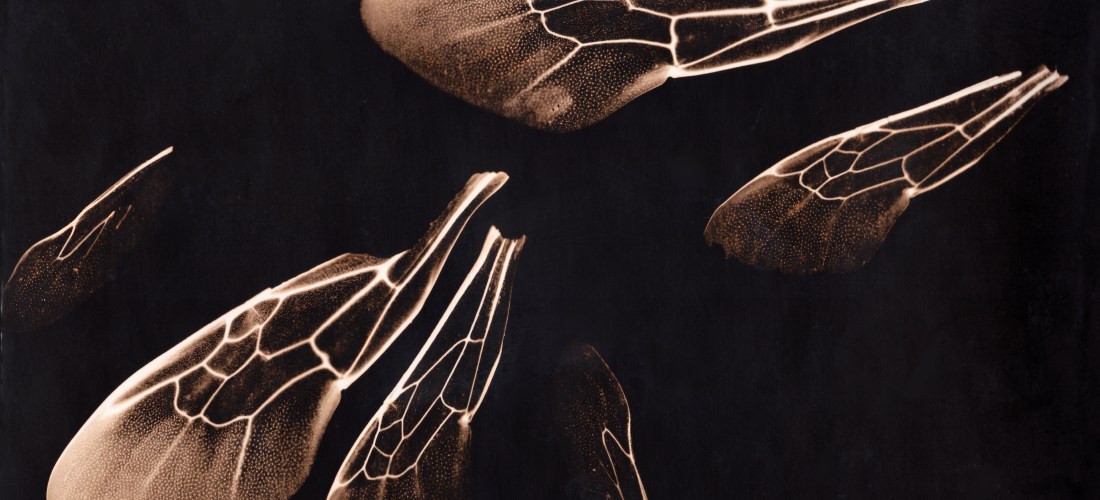
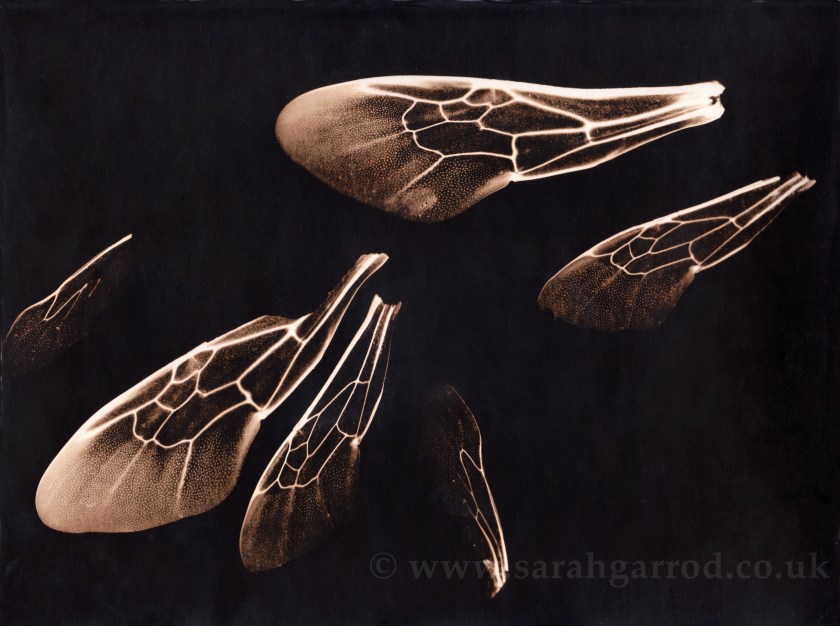
“The Last Bees” Photogram I made in the darkroom from the wings of dead bees – lith print

Blossom In the New Normal

Environment, photography

The cherry blossom took on a huge significance this year, a sign of optimism that things are returning to normal after the nightmare of the pandemic.

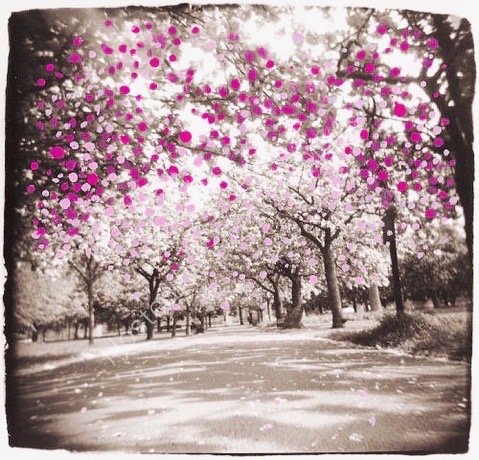
A previous darkroom print that I painted

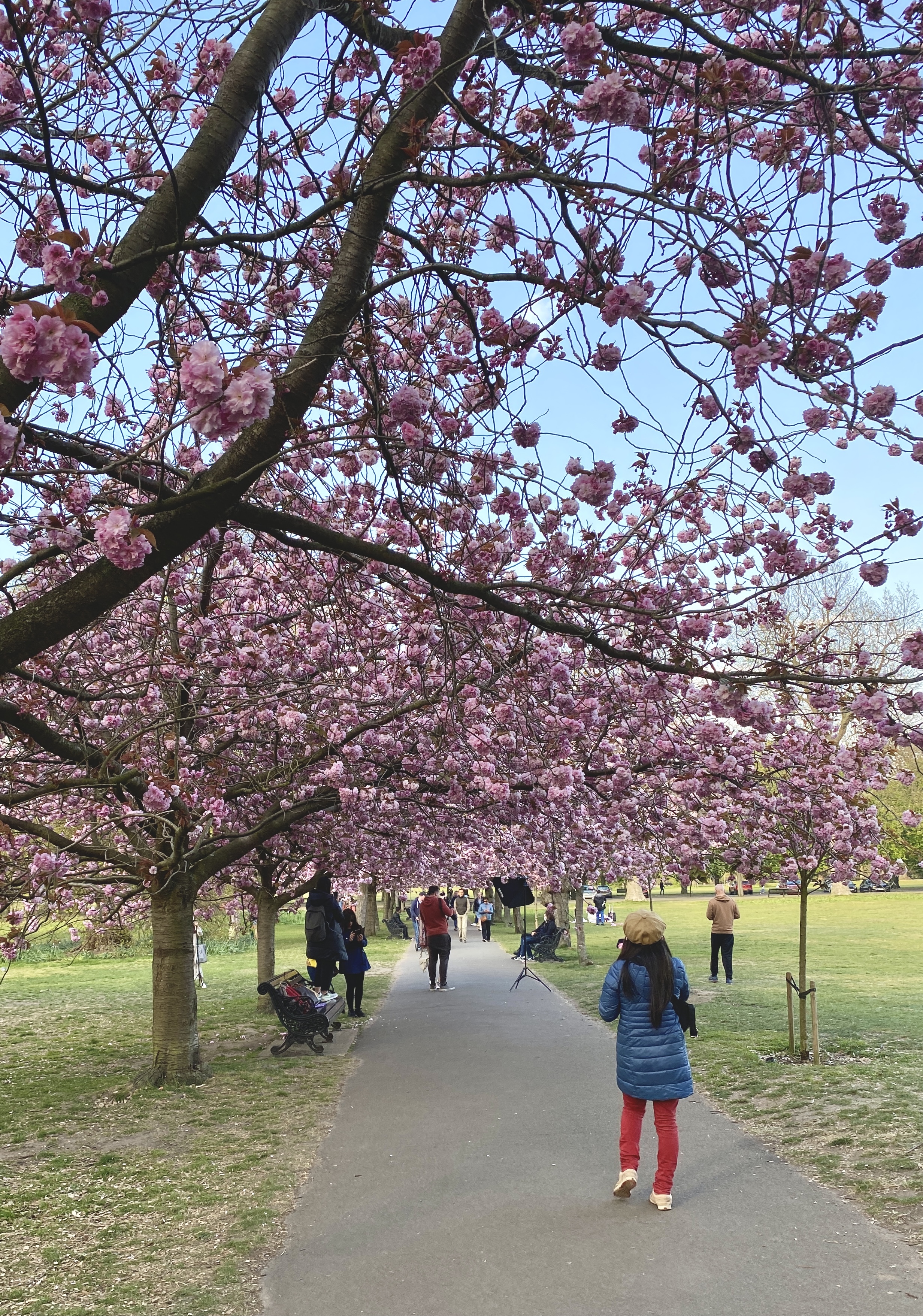
Every year I walk through the avenue of blossom trees in Greenwich Park to breathe in the sights and smells of the spring blooms, which scientifically are a great boost for wellness. Just like insects, we still respond to the power of plants and flowers. It’s easy to forget our connection to Nature after a winter of quarantine with a connection to computers.

This year the blossom avenue was full of photographers , mainly Instagrammers making use of the delightful backdrop of pink. Every professional influencer wants that shot in front of the beautiful blossom.

It was impossible to have my relaxing stroll because you had to dodge camera tripods and lighting stands at a safe 2m distance. I hung around quite happily to wait for them to finish so I could have a turn walking on the path. But each of the 7 photographers there (on a quiet rainy Tuesday), stayed for at least 2hrs. One photographer had models with different outfits in suitcases and was there a whole day with a picnic laid out.

It was interesting to observe the “selfishness” of these people. They were behind the cameras as if they were not part of reality, it’s not like they didn’t care. I wondered if this was an effect of quarantine, social Media, or what? I’ve never seen anything like it. I heard that people were snapping off twigs of blossom to pose with. Many times, in daffodil season, I have repremanded people for trampling the flowers whilst posing for photos.

But Why?

  • some city dwellers are unaware that they are destroying Nature because they have barely experienced plants
  • tourists sometimes don’t understand that these are cultivated and not wild plants
  • Children expect flowers to spring up again like rubber toys
  • this new phenomenon where people seem to be looking at life through a screen , and aren’t in the ‘reality’ (if there is a ‘reality’)
  • a small minority just don’t care and willfully toss litter, and destroy plants which they believe are there to serve them

I must look more into the Japanese tradition of Hanami. This is possibly what was going on, people spending a whole day under the blossom in groups is a tradition that I was not aware of.

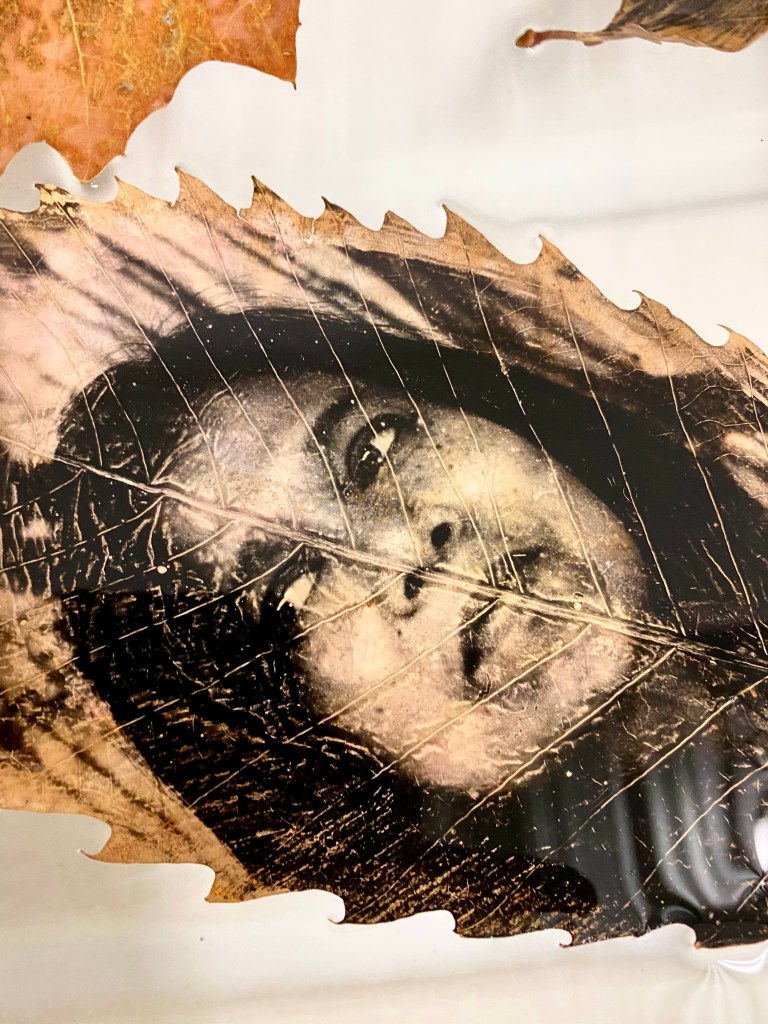
Its is also interesting that in Buddhist tradition each blossom represents a fallen Samuri, it reminded me of my Leaf Project in which I am making each leaf represent a Londoner. In China the flowers signify hope and feminine power.

This photo shows how I managed to find a lone tree by the gate to photograph. There is always a way to get the shot!

As a photographer I feel dutybound to convey that picturesque Nature is not just a convenient backdrop, its the very fabric of our life, and future generations depend on it.

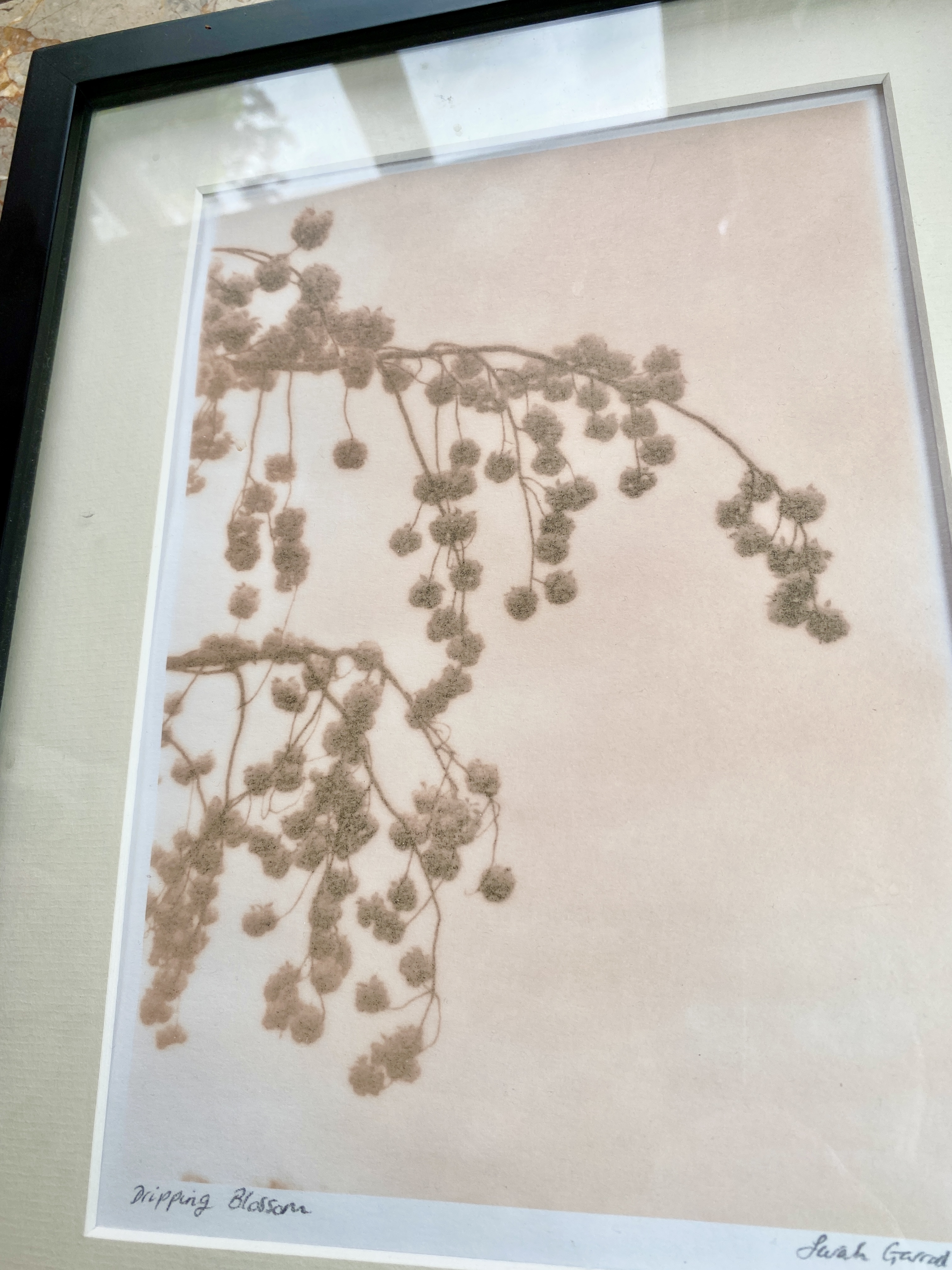
my photo from a quieter year

Leaf Science

Environment, photography

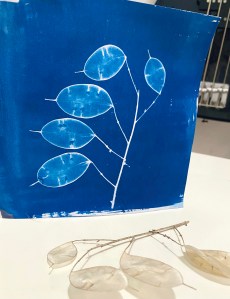
This week I was asked to give a presentation to the Thamesmead Nature Forum. They were very interested to see my my Leaf Project (in progress) and other ways that I collaborate with Nature in my work. I had some great feedback “spectacular presentation” and “beautiful work”. I even managed to pull off a live cyanotype demo with an Honesty plant (left) that came out rather well.

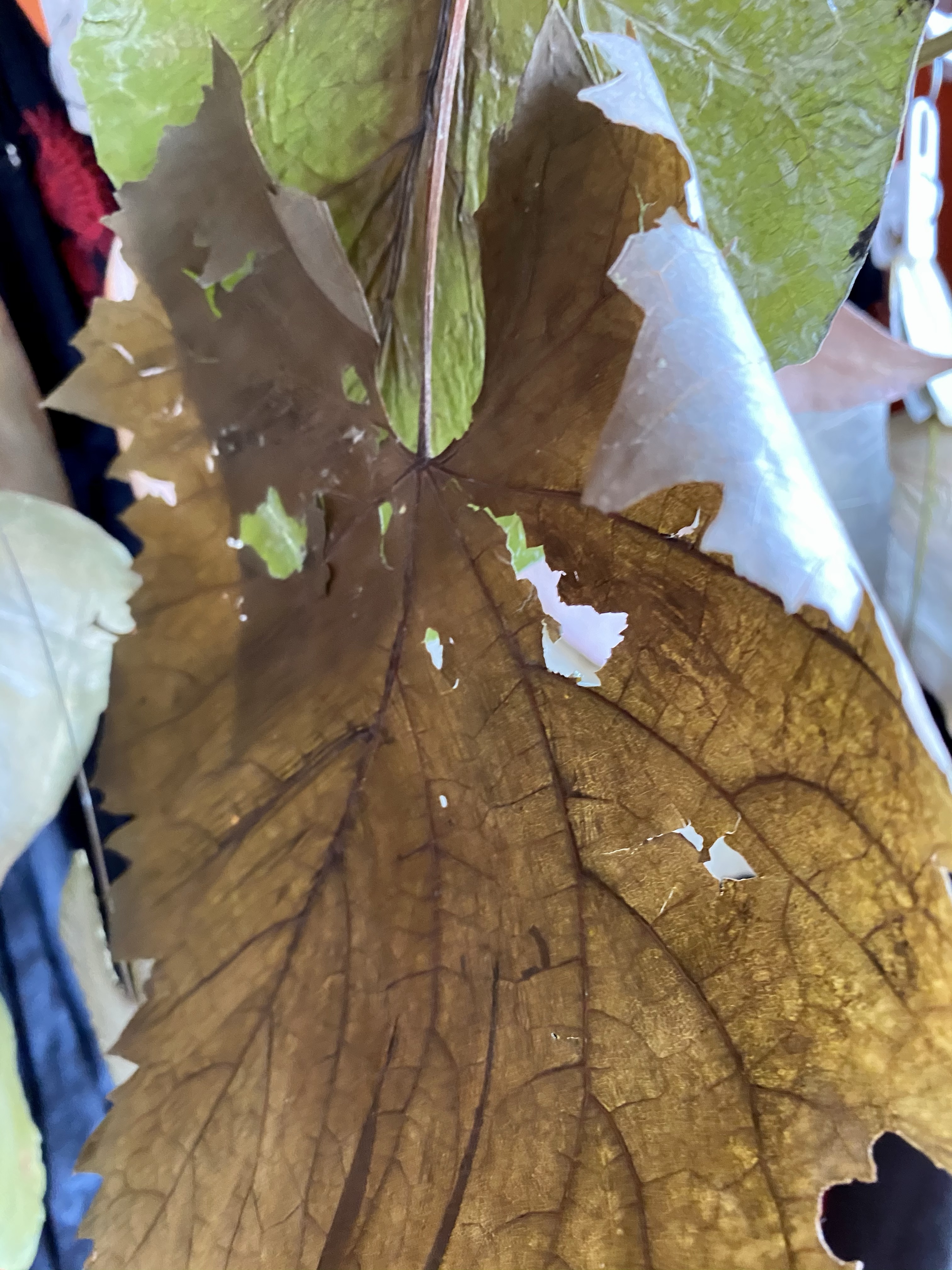
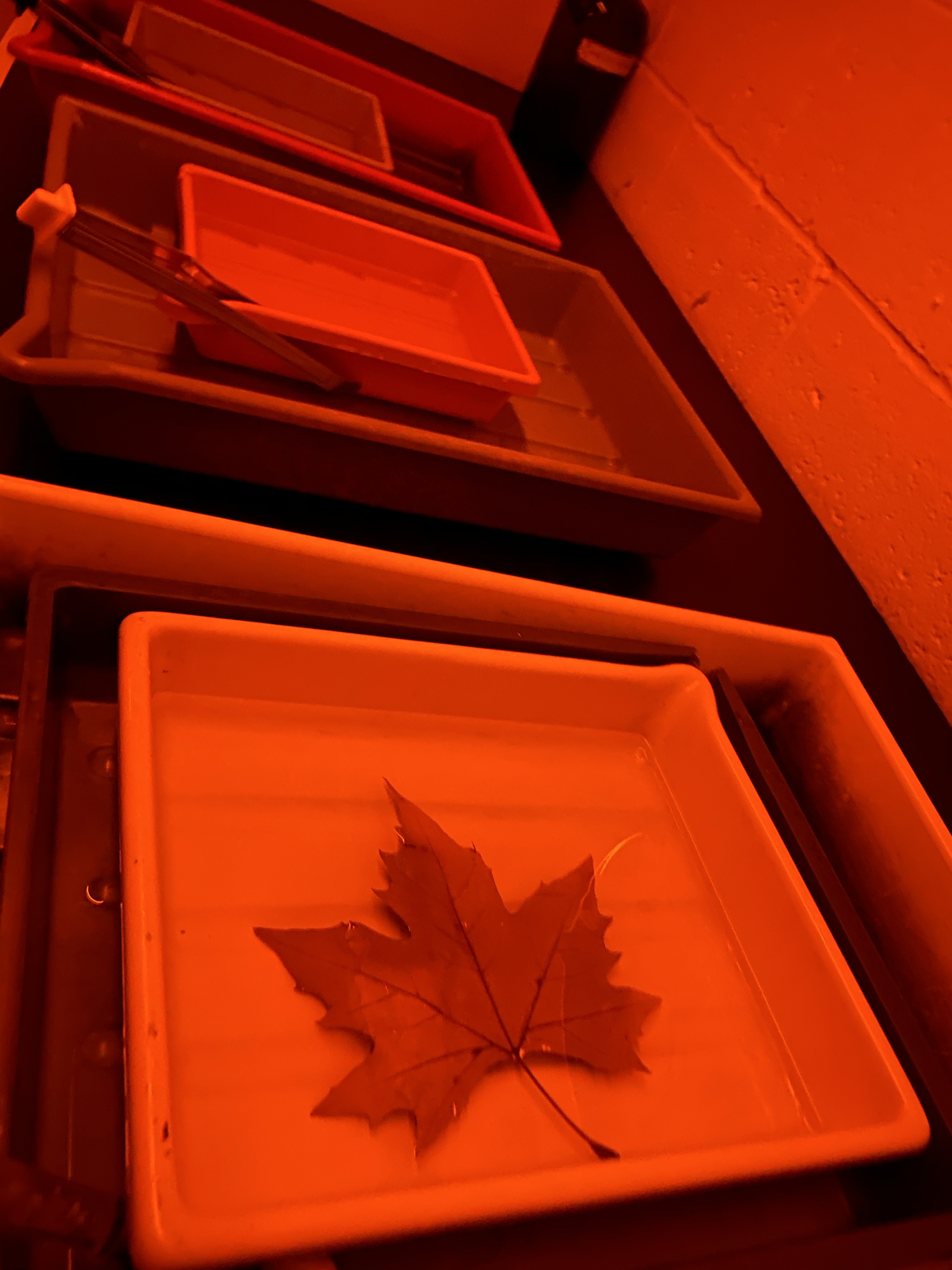
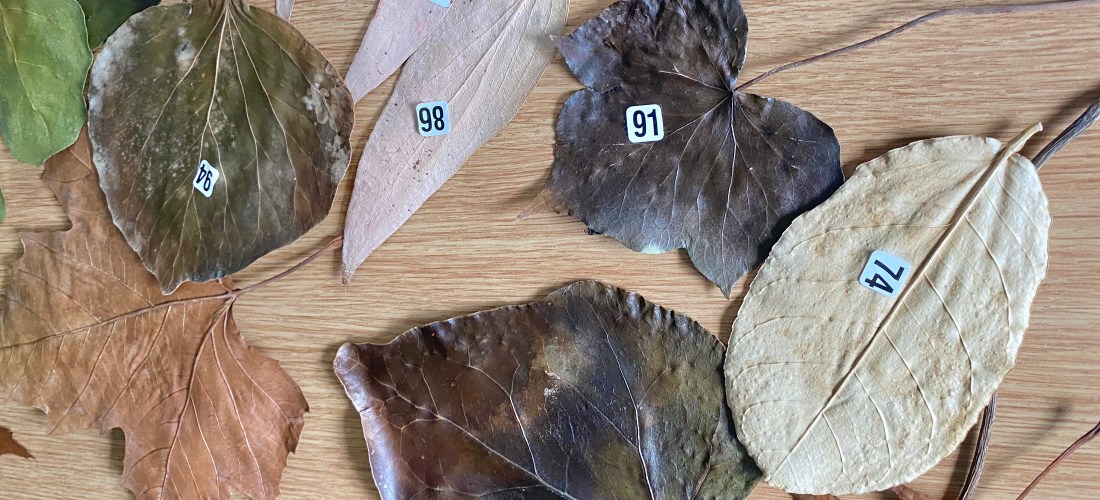
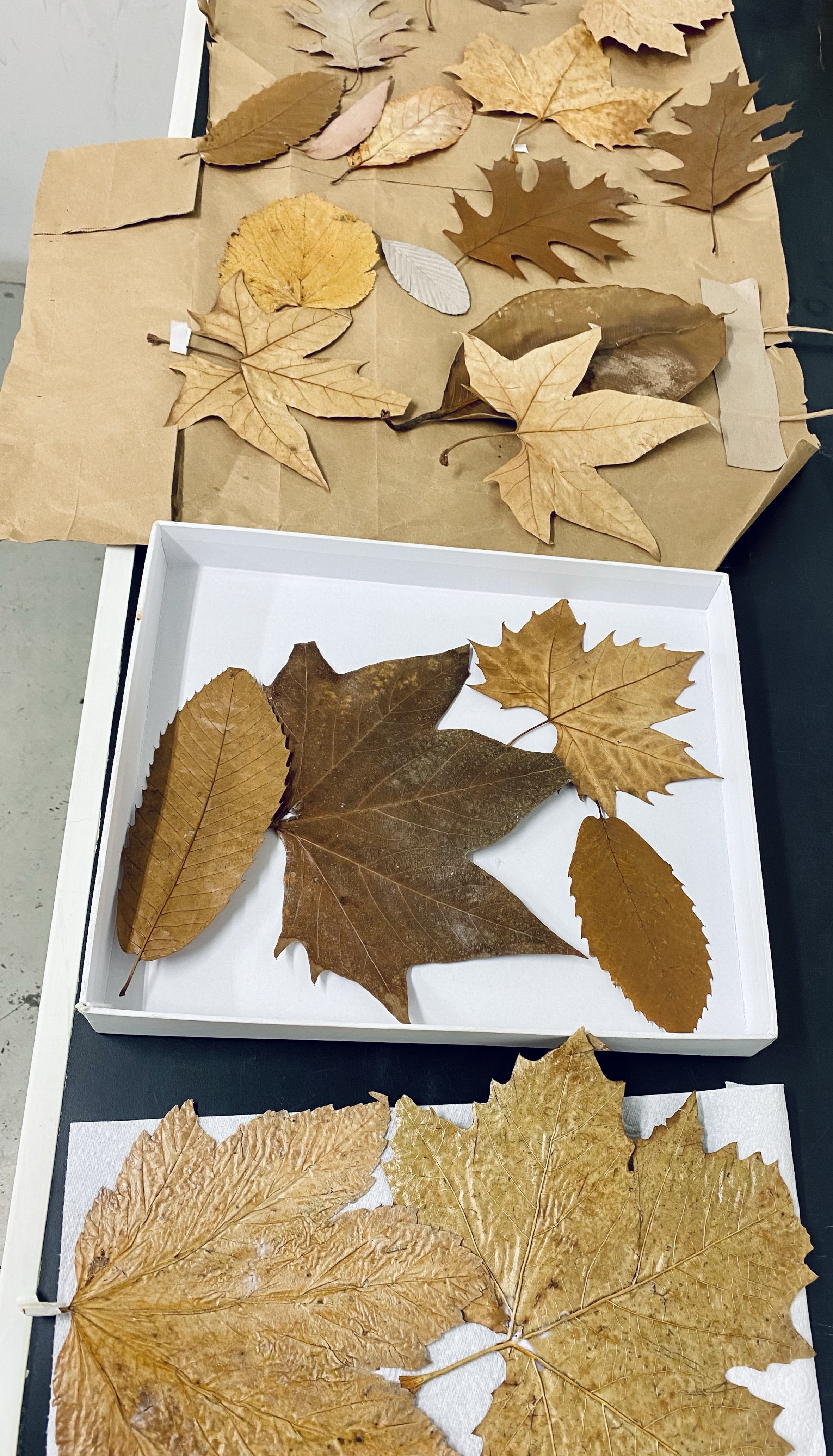
Meanwhile, the printing on leaves is laborious. From drying, pressing and coating the leaves to printing them in the darkroom. Only a few make the final cut. These are some of the technical difficulties that I have had to resolve through experiments:

In fact this whole process makes me appreciate a pristine uniform pack of photographic paper in a whole new light !

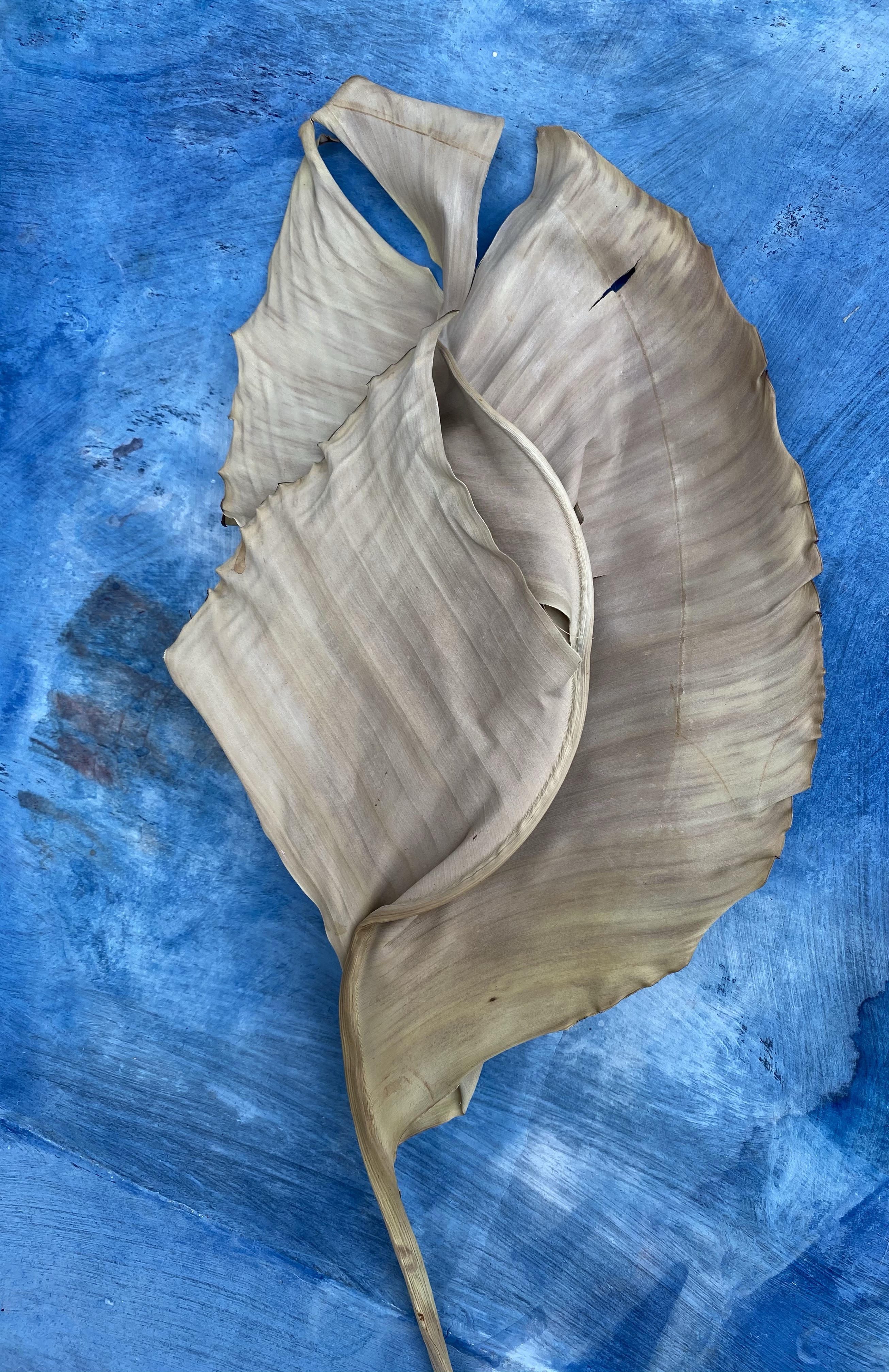
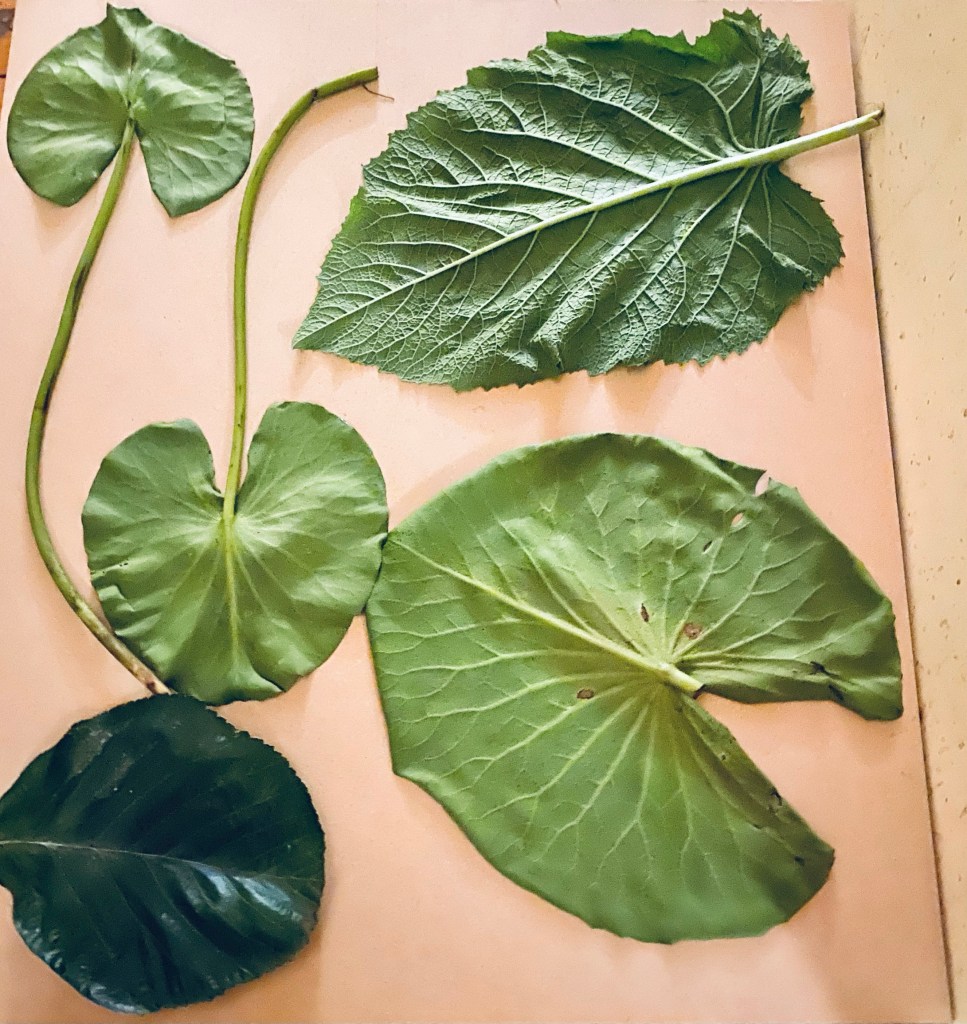
I coat the leaves in liquid silver emulsion and store them in a large light tight metal box that I cart around wrapped in coats under darkness! At one point I lost my car keys and house keys with this cumbersome cargo and had to change all my locks! One plus was the amazing tabacco-like aroma from the soaked lilly pads. I have yet to get a good print on one of these magical lily pads.

My search for appropriate leaves has led to me examining leaves in great detail, the variety is immense. The patterns in Nature, the veins , the leaf shapes, the infinite fractals. For sometime I have been engrossed with the pattern of branching, branching that could be echoed in a branching multiverse.

Equally fascinating are the distorted leaves I find, those which grow differently due to disease, or those from roadside trees that are tarnished with black pollution.

Some of the leaves have been collected from specific sites, such as Tidemill Gardens before the trees were ripped up to make way for new flats. These are large and frail and have a different quality (persona if you like) to the fresher leaves. It becomes an interesting exercise to match the faces with their leaves. I have a bunch of tiny leaves that I use as test strips. The fact that I am going through about 25 leaves to get 1 print I am happy with, makes them even more special and precious to me. “Exquisite” was a word someone used to describe them, and that’s definitelty what I am aiming for.

I am very grateful for a grant from the Richard & Siobhan Coward Foundation that has enabled me to buy materials for this work.